


Polythene, nitrile and latex gloves differ in fit, strength, tactile sensitivity, allergy considerations and intended use. Loose-fit disposable PE gloves suit quick, low-risk handling tasks, while closer-fitting options may be better for detailed or higher-risk work. Buyers should compare the actual workflow, required certification, replacement frequency and cost per usable glove rather than selecting a material only by its headline pack price.
Why Glove Material Matters
Glove materials behave differently in fit, strength, tactile control, chemical resistance and cost. A business that buys one glove for every department may either overspend or leave workers underprotected. The practical approach is to map each task, identify hazards and choose the least complex glove that safely meets the requirement and applicable workplace rules.
Understanding Polythene Gloves
Polythene gloves are typically loose-fitting, lightweight and inexpensive, making them useful for brief food service, packing and low-risk hygiene tasks. They can be changed quickly, which supports high-turnover workflows. Their limitations include lower dexterity, weaker tear resistance and poor suitability for many chemicals, sharp objects, heat and medical examination work.
Understanding Nitrile Gloves
Nitrile gloves generally provide a closer fit, better dexterity and stronger puncture and chemical resistance than basic PE gloves, although performance depends on thickness and certification. They are common in healthcare, laboratories, cleaning and detailed food work. Their higher unit price can be justified where longer wear time or greater protection is genuinely required.
Understanding Latex Gloves
Latex gloves can offer flexibility, comfort and tactile sensitivity, but natural rubber latex may trigger allergies in some users. Businesses considering latex need an allergy-management approach and should confirm whether powdered or powder-free products are permitted. Latex is not automatically suitable for every chemical, so resistance data and task assessment remain necessary.
Comparing Fit and Dexterity
Loose PE gloves support rapid changes but can feel imprecise during fine assembly. Nitrile and latex usually contour more closely to the hand, improving control of small tools and delicate products. The best fit depends on the job: speed may dominate at a bakery counter, while precision may dominate in a laboratory or detailed cleaning task.
Comparing Tear and Puncture Resistance
Basic polythene gloves can tear at seams or snag during friction-heavy tasks. Nitrile commonly offers greater puncture resistance, while latex provides elasticity but may still fail against sharp hazards. None of these disposable gloves should replace purpose-designed cut-resistant protection. Test representative samples and use manufacturer data where puncture performance matters.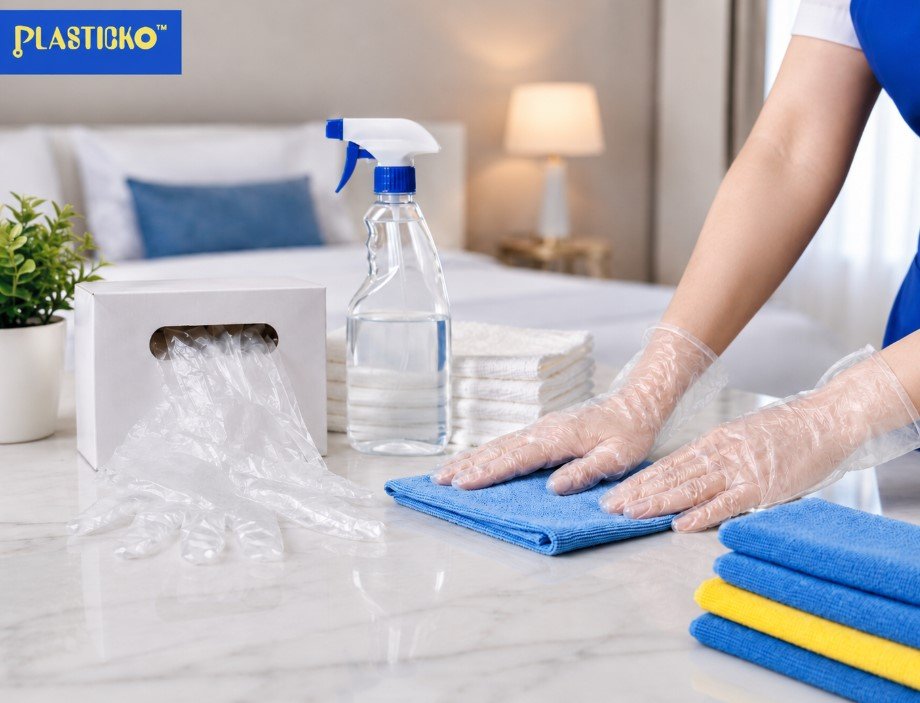
Comparing Food Service Applications
PE gloves can be economical for brief ready-to-eat food handling when they are food-contact suitable and changed often. Nitrile may suit longer or more precise preparation where fit and grip matter. Latex policies vary because of allergy concerns. Food businesses should combine glove selection with hand hygiene, utensil use and cross-contamination controls.
Comparing Cleaning Applications
Light dusting or low-risk housekeeping may use PE gloves under a defined procedure, but wet cleaning chemicals often require a more resistant material. Nitrile is frequently considered for many cleaning tasks, yet compatibility must be checked against the actual product and concentration. No glove should be selected solely because it is marketed as disposable.
Comparing Allergy Considerations
Polythene and nitrile avoid natural rubber latex proteins, which can be relevant where employees or customers have latex sensitivity. However, all glove types may include additives or create skin irritation through heat and moisture. Occupational-health guidance, product information and employee feedback should inform the final workplace decision.
Comparing Cost per Task
The cheapest glove per piece is not always the cheapest glove per completed task. Calculate how many changes, tears and double-gloving events occur, then include training, disposal and stock complexity. A more expensive glove may reduce failures in demanding work, while using nitrile for a two-minute dry packing task may add unnecessary cost.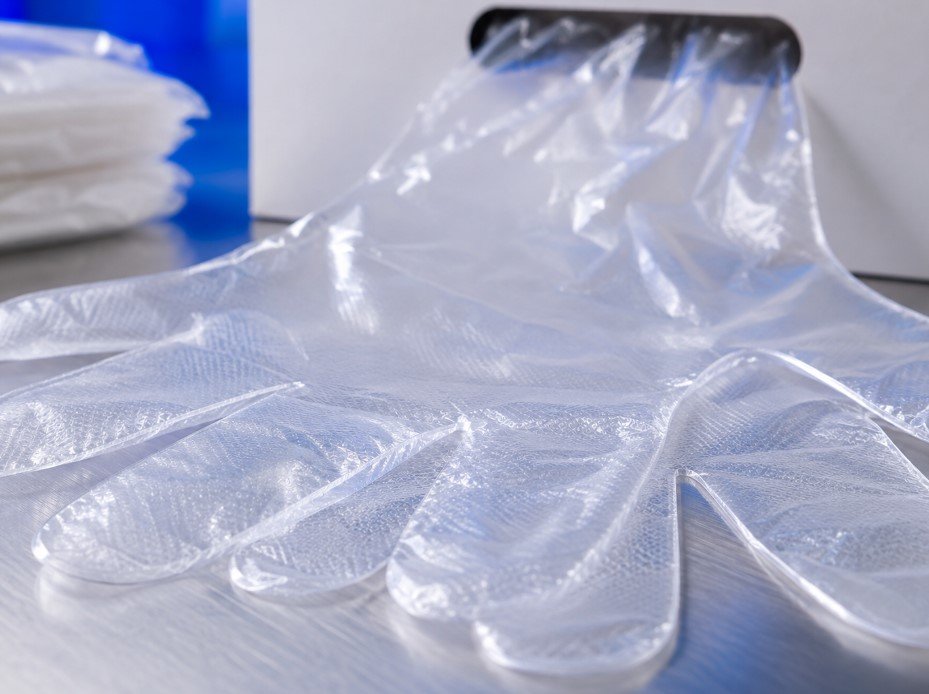
Comparing Storage and Shelf Management
All disposable gloves need clean, dry storage away from heat and sunlight. Multiple materials and sizes increase the number of stock-keeping units, so labels and reorder points must be clear. Central procurement should prevent accidental substitution, especially where one glove is approved for food contact and another is reserved for chemical cleaning.
Creating a Task-Based Glove Matrix
List departments down one side of a simple matrix and tasks across the other, then record contact material, duration, grip, dexterity and hazard requirements. Assign the approved glove type and replacement trigger to each task. This tool makes training easier and gives procurement a defensible reason for stocking different glove types.
Avoiding Misleading Product Claims
Terms such as food grade, medical, heavy duty or chemical resistant should be supported by a clear specification and relevant documentation. Buyers should not infer certification from color or thickness. Ask suppliers what the glove is designed to do, what it is not designed to do and which standards or test data apply.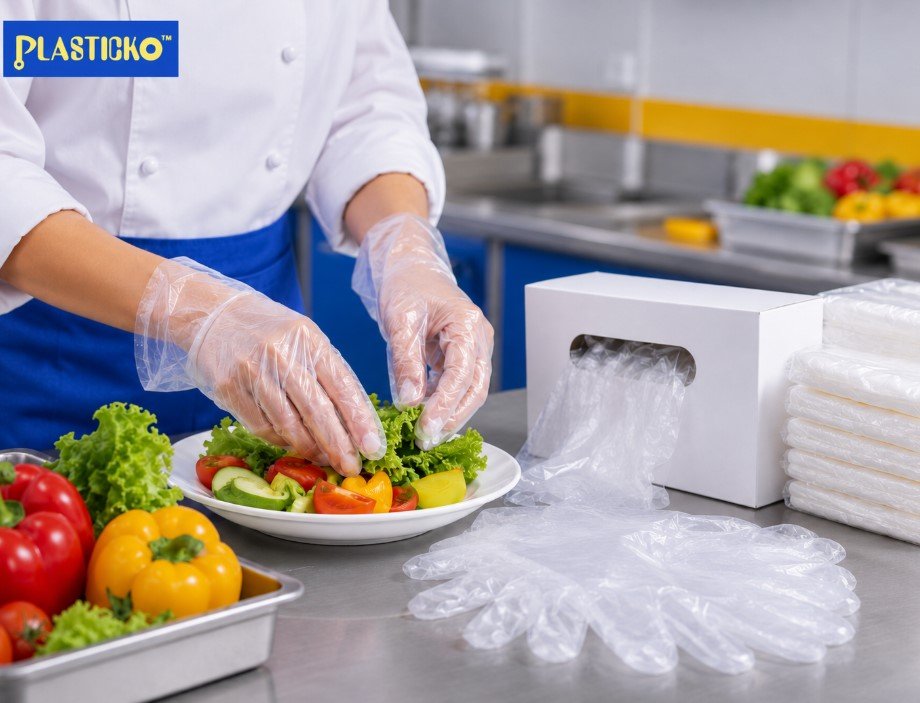
Choosing the Right Supplier Mix
A supplier that provides PE gloves, waste bags, bins, trays and cleaning tools can simplify purchasing, but convenience should not replace technical review. Confirm each glove specification and retain records of approved samples. For critical tasks, consider a specialist safety supplier or additional documentation before relying on a general-use product.
Get a Quote Based on the Correct Material
When contacting Plasticko, describe the work rather than requesting only “disposable gloves.” State food contact, cleaning exposure, wear time, required fit, quantity and city. Plasticko can quote polythene gloves for suitable light-duty applications, while the buyer should seek a task-appropriate certified alternative whenever the risk assessment requires greater protection.
Polythene Gloves Price Comparison in Pakistan
Public online listings checked in August 2026 show that prices vary by quantity, thickness, packaging, delivery charges and seller type. Use the following ranges only as a market-reference framework; Plasticko should provide a current quotation after confirming pack size, carton quantity, material and delivery city.
| Purchase Type | Typical Pack / Quantity | Indicative Market Range | Best For | Buying Note |
| Retail sample pack | 100 disposable PE gloves | PKR 70–150 | Small kitchens and testing | Confirm whether count means pieces or pairs. |
| Large retail bundle | 300–500 gloves | PKR 250–650 | Cafes and light daily use | Compare price per 100 pieces. |
| Wholesale carton | Multiple packets/carton | Request current quote | Restaurants, caterers, distributors | MOQ, thickness and freight change final rate. |
| Custom B2B supply | Scheduled repeat orders | Quote-based | Chains and procurement teams | Ask about consistency, packing and delivery plan. |
Important: polythene gloves are generally intended for light-duty, non-sterile and single-use tasks. Buyers should not treat basic PE gloves as a substitute for certified medical, chemical-resistant, cut-resistant or heat-resistant gloves.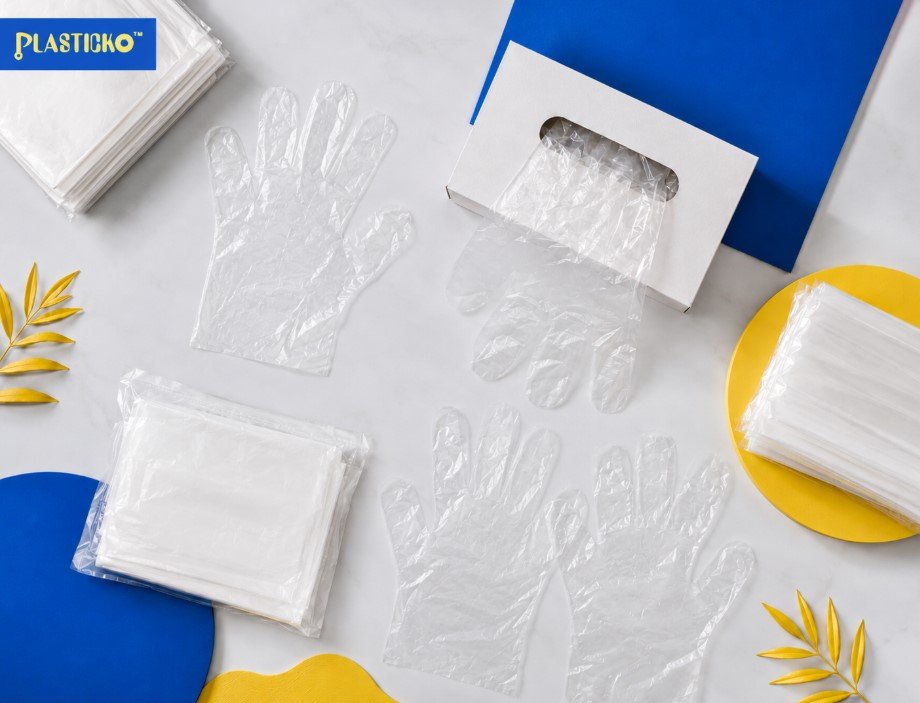
Related Products and Helpful Buying Resources
Use this single bullet section to build contextual internal links for users who are planning a complete hygiene, food-service or waste-management order:
- Plastic Serving Tray for Restaurants and Fast-Food Service
- Eco-Friendly Garbage Bags 18×24
- Eco-Friendly Garbage Bags 24×36
- Heavy-Duty Garbage Bags 36×48
- Wet Floor Caution Sign
- 70L Pedal Dustbin for Commercial Waste
- Wholesale Cleaning and Hygiene Supply Support
- Polythene Gloves Product Page
- How to Choose Polythene Gloves for Food Handling
- Disposable Polythene Gloves Buying Guide Pakistan
- How to Store and Use Polythene Gloves Safely
FAQs About Polythene Gloves
What are polythene gloves used for?
Polythene gloves are commonly used for short food-handling, serving, packing, cleaning and hygiene tasks where workers need a quick disposable barrier. Suitability depends on the exact task, glove thickness, contact time and workplace rules.
Are disposable PE gloves suitable for food handling?
They can be appropriate for light food-contact tasks when the supplied product is food-contact suitable and used under a documented hygiene procedure. Staff must change gloves between tasks and continue proper handwashing.
Are polythene gloves medical gloves?
Standard polythene gloves are usually non-sterile, loose-fitting and intended for general light-duty use. They should not be described or purchased as medical examination gloves unless the product carries the required certification and specification.
How many gloves are normally supplied in one pack?
A common market pack contains 100 pieces, although 200, 300, 500-piece bundles and wholesale cartons are also available. Procurement teams should confirm whether a listing counts individual gloves or pairs.
Are transparent polythene gloves powder-free?
Many PE gloves are powder-free because their loose shape and embossed surface help users put them on quickly. The buyer should still confirm the actual specification instead of assuming every transparent glove has identical features.
Can polythene gloves be reused?
Disposable polythene gloves are designed for one task or one short work sequence. Reusing them can transfer contamination, weaken the material and undermine hygiene controls, so they should be discarded responsibly after use.
Which size should a business order?
Many disposable PE gloves use a loose universal or large fit, but sizing varies by supplier. Request dimensions or a sample when staff comfort, dexterity and speed are important for repeated daily operations.
What is the wholesale price of polythene gloves in Pakistan?
Wholesale pricing depends on material grade, thickness, pieces per pack, packets per carton, MOQ, freight and order frequency. A quotation should state all these details so buyers can compare the true cost per 100 gloves.
Can these gloves protect against chemicals or sharp objects?
Basic PE gloves are not designed for hazardous chemicals, blades, punctures, high heat or heavy mechanical work. Use task-specific certified protective gloves after a workplace risk assessment for those hazards.
How can I order polythene gloves in bulk from Plasticko?
Share the required quantity, pack size, intended use, delivery city and preferred schedule through Plasticko’s wholesale quotation channel. Ask for current specifications, availability, MOQ, dispatch time and payment terms before approval.