

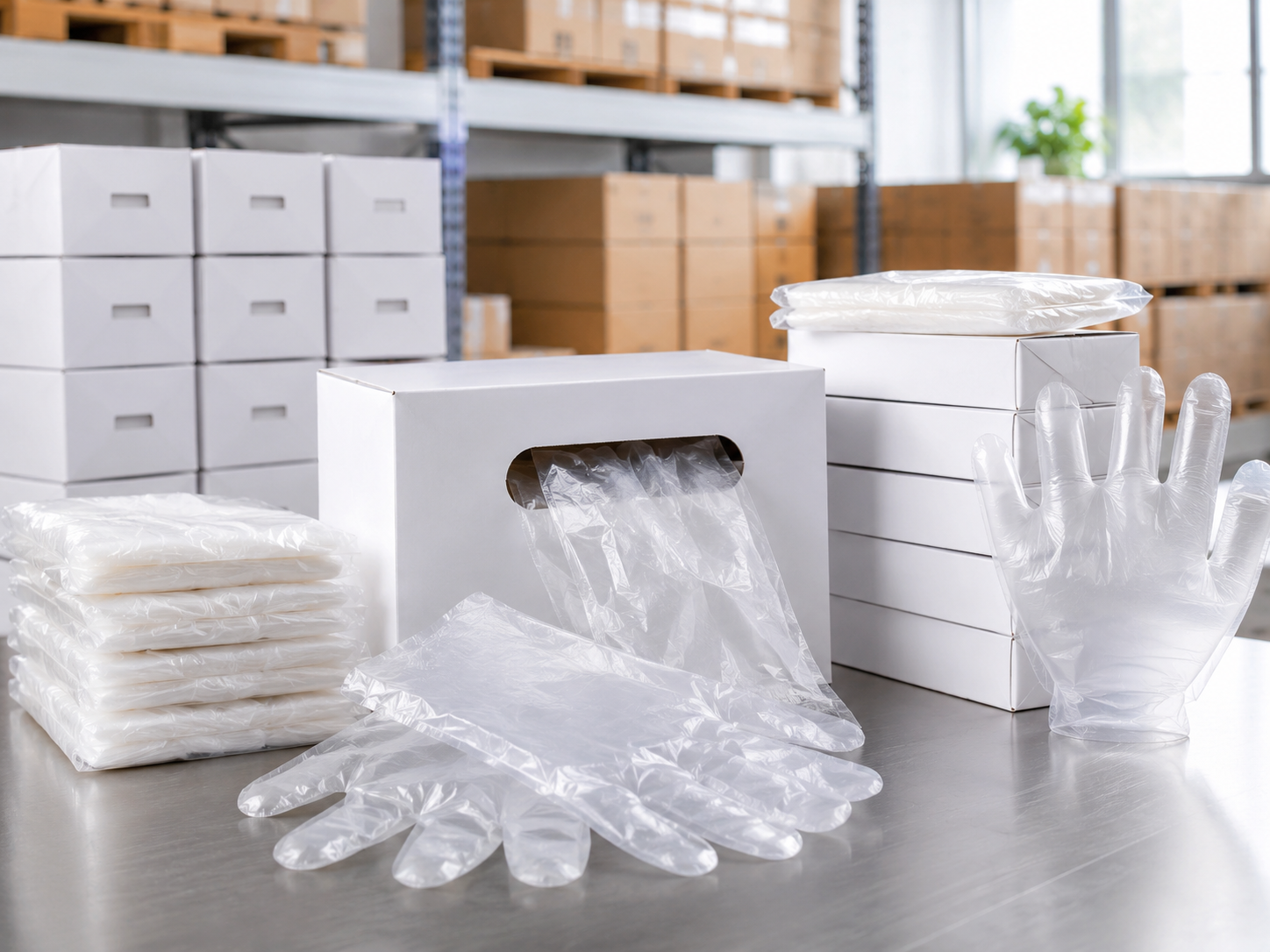
Choosing suitable gloves starts with the exact task, such as plating ready-to-eat food, packing bakery items, portioning dry ingredients or supporting light cleaning. Buyers should document contact time, grip needs, contamination risk, pack count, carton configuration and delivery schedule. A representative sample should be tested before approval so the selected disposable gloves support hygiene, staff comfort and controlled B2B procurement costs.
Start with the Food Handling Task
Choosing gloves begins with the exact action: plating ready-to-eat food, packing bakery items, portioning dry ingredients or supporting a cleaning step. Each task has a different contact time, grip requirement and contamination risk. Documenting the workflow prevents buyers from treating every disposable glove as interchangeable and helps the supplier recommend a more suitable pack, material and thickness.
Confirm Food-Contact Suitability
A low price or transparent appearance does not automatically prove that a glove is suitable for direct food contact. Ask for the supplier’s intended-use statement and relevant product documentation, especially when gloves will touch ready-to-eat items. Procurement records should identify the approved product so branches do not replace it with an unverified alternative during urgent purchasing.
Match Glove Strength to Contact Time
Very short tasks may work with lightweight PE gloves, while longer handling or repeated friction can cause thin material to stretch or split. Estimate how long workers keep one glove on and what surfaces they touch. A glove that appears cheaper may cost more if frequent tearing increases consumption, interrupts service or causes staff to double-glove without authorization.
Check Fit, Opening and Dexterity
Loose-fit polythene gloves are designed for speed, but excessive bagginess can make it harder to grip small utensils or complete detailed assembly. Test the glove with representative employees and real packaging before approving cartons. The opening should separate easily without tearing, and the hand should move comfortably without the glove sliding off during normal service.


Assess Embossing and Grip
Light embossing can improve the handling of dry foods, paper wraps and containers, yet performance may change around oil, moisture or smooth chilled packaging. Conduct a simple workstation trial rather than relying on a catalogue description. Where secure grip is critical, a different glove material or task tool may be more appropriate than basic disposable polyethylene.
Plan Glove Changes Around Cross-Contamination
The glove-change procedure should be written around risk events: changing from raw to cooked food, touching money, opening doors, handling waste, cleaning a surface or using a phone. Gloves should be removed without touching the contaminated exterior and hands should be washed as required. Training staff on these moments matters more than merely placing packets at the workstation.
Calculate Daily and Monthly Consumption
Count glove-change events for each station, multiply by shifts and operating days, then add a reasonable buffer for peaks and damaged pieces. This calculation helps restaurants avoid both emergency shortages and excessive stock. Comparing suppliers on cost per 100 usable pieces gives a clearer view than comparing carton totals that may contain different packet counts.
Inspect Packaging and Labelling
Packets should arrive sealed, clean and clearly labelled with product description, quantity and any relevant use information. Cartons should protect the gloves from dust, moisture and crushing during transport. Unclear counts or damaged inner packs make branch distribution difficult, so include acceptable packaging condition in the purchase requirement for recurring orders.
Create an Incoming Quality Check
On receipt, inspect a sample from several packets for odor, discoloration, seam integrity, opening consistency and obvious contamination. Record the batch and supplier details if a problem appears. A brief incoming check can stop a weak shipment from reaching multiple outlets, where the same issue becomes harder and more expensive to manage.
Compare Polythene with Other Glove Materials
PE gloves are valued for rapid changes and economy in light tasks, while nitrile or other materials may offer closer fit and stronger resistance for different applications. The decision should follow a task assessment rather than brand familiarity. Avoid upgrading every task unnecessarily, but do not force lightweight polythene gloves into work that needs certified protection.




Train Staff Before Rollout
Demonstrate handwashing, donning, removal, glove-change triggers and correct disposal during onboarding and refresher sessions. Supervisors should correct the common mistake of wearing one pair through multiple activities. Clear signage near the glove station can reinforce the process, while observation helps management understand whether the chosen glove supports or slows the workflow.
Build a Reliable Restaurant Supply Plan
Multi-branch operators should standardize approved specifications, minimum stock levels and reorder points. Central purchasing can negotiate carton quantities, but each outlet still needs a practical allocation based on sales volume and service type. Keep an alternative approved specification for continuity rather than accepting an unknown substitute during a supply interruption.
Request Samples Before a Large Order
A sample allows the kitchen or service team to test tear resistance, grip, fit and ease of removal under normal conditions. Record feedback from more than one user because hand size and work style vary. The small cost of a trial is usually lower than the disruption caused by receiving a large quantity that employees cannot use efficiently.
Include Delivery Details in the Quote
State the delivery city, branch count, required date, receiving hours and any need for separated cartons. Freight can materially change the unit cost for lightweight but bulky disposable products. Asking for a delivered quotation makes comparisons fair and helps the supplier plan dispatch for Lahore, Karachi, Islamabad, Rawalpindi and other destinations.
Order Food Handling Polythene Gloves Confidently
Send Plasticko a structured request covering intended food task, pieces per pack, estimated monthly consumption, delivery city and schedule. Ask for the current product specification and quote rather than relying on a generic listing. This purchasing discipline supports hygiene, cost control and consistent service across restaurants, bakeries, caterers and institutional kitchens.


Polythene Gloves Price Comparison in Pakistan
Public online listings checked in August 2026 show that prices vary by quantity, thickness, packaging, delivery charges and seller type. Use the following ranges only as a market-reference framework; Plasticko should provide a current quotation after confirming pack size, carton quantity, material and delivery city.
| Purchase Type | Typical Pack / Quantity | Indicative Market Range | Best For | Buying Note |
| Retail sample pack | 100 disposable PE gloves | PKR 70–150 | Small kitchens and testing | Confirm whether count means pieces or pairs. |
| Large retail bundle | 300–500 gloves | PKR 250–650 | Cafes and light daily use | Compare price per 100 pieces. |
| Wholesale carton | Multiple packets/carton | Request current quote | Restaurants, caterers, distributors | MOQ, thickness and freight change final rate. |
| Custom B2B supply | Scheduled repeat orders | Quote-based | Chains and procurement teams | Ask about consistency, packing and delivery plan. |
Important: polythene gloves are generally intended for light-duty, non-sterile and single-use tasks. Buyers should not treat basic PE gloves as a substitute for certified medical, chemical-resistant, cut-resistant or heat-resistant gloves.
Related Products and Helpful Buying Resources
Use this single bullet section to build contextual internal links for users who are planning a complete hygiene, food-service or waste-management order:
- Plastic Serving Tray for Restaurants and Fast-Food Service
- Eco-Friendly Garbage Bags 18×24
- Eco-Friendly Garbage Bags 24×36
- Heavy-Duty Garbage Bags 36×48
- Wet Floor Caution Sign
- 70L Pedal Dustbin for Commercial Waste
- Wholesale Cleaning and Hygiene Supply Support
- Polythene Gloves Product Page
- Polythene Gloves vs Nitrile and Latex Gloves
- Disposable Polythene Gloves Buying Guide Pakistan
- How to Store and Use Polythene Gloves Safely


FAQs About Polythene Gloves
What are polythene gloves used for?
Polythene gloves are commonly used for short food-handling, serving, packing, cleaning and hygiene tasks where workers need a quick disposable barrier. Suitability depends on the exact task, glove thickness, contact time and workplace rules.
Are disposable PE gloves suitable for food handling?
They can be appropriate for light food-contact tasks when the supplied product is food-contact suitable and used under a documented hygiene procedure. Staff must change gloves between tasks and continue proper handwashing.
Are polythene gloves medical gloves?
Standard polythene gloves are usually non-sterile, loose-fitting and intended for general light-duty use. They should not be described or purchased as medical examination gloves unless the product carries the required certification and specification.
How many gloves are normally supplied in one pack?
A common market pack contains 100 pieces, although 200, 300, 500-piece bundles and wholesale cartons are also available. Procurement teams should confirm whether a listing counts individual gloves or pairs.
Are transparent polythene gloves powder-free?
Many PE gloves are powder-free because their loose shape and embossed surface help users put them on quickly. The buyer should still confirm the actual specification instead of assuming every transparent glove has identical features.
Can polythene gloves be reused?
Disposable polythene gloves are designed for one task or one short work sequence. Reusing them can transfer contamination, weaken the material and undermine hygiene controls, so they should be discarded responsibly after use.
Which size should a business order?
Many disposable PE gloves use a loose universal or large fit, but sizing varies by supplier. Request dimensions or a sample when staff comfort, dexterity and speed are important for repeated daily operations.
What is the wholesale price of polythene gloves in Pakistan?
Wholesale pricing depends on material grade, thickness, pieces per pack, packets per carton, MOQ, freight and order frequency. A quotation should state all these details so buyers can compare the true cost per 100 gloves.
Can these gloves protect against chemicals or sharp objects?
Basic PE gloves are not designed for hazardous chemicals, blades, punctures, high heat or heavy mechanical work. Use task-specific certified protective gloves after a workplace risk assessment for those hazards.
How can I order polythene gloves in bulk from Plasticko?
Share the required quantity, pack size, intended use, delivery city and preferred schedule through Plasticko’s wholesale quotation channel. Ask for current specifications, availability, MOQ, dispatch time and payment terms before approval.
Order Polythene Gloves and Get a Free Quote
Ready to source disposable polythene gloves for a restaurant, bakery, catering company, retailer, cleaning team or wholesale business? Get a wholesale quote from Plasticko with your required pack count, carton quantity, intended task and delivery city. Confirm the current specification and delivered price before placing the order.