

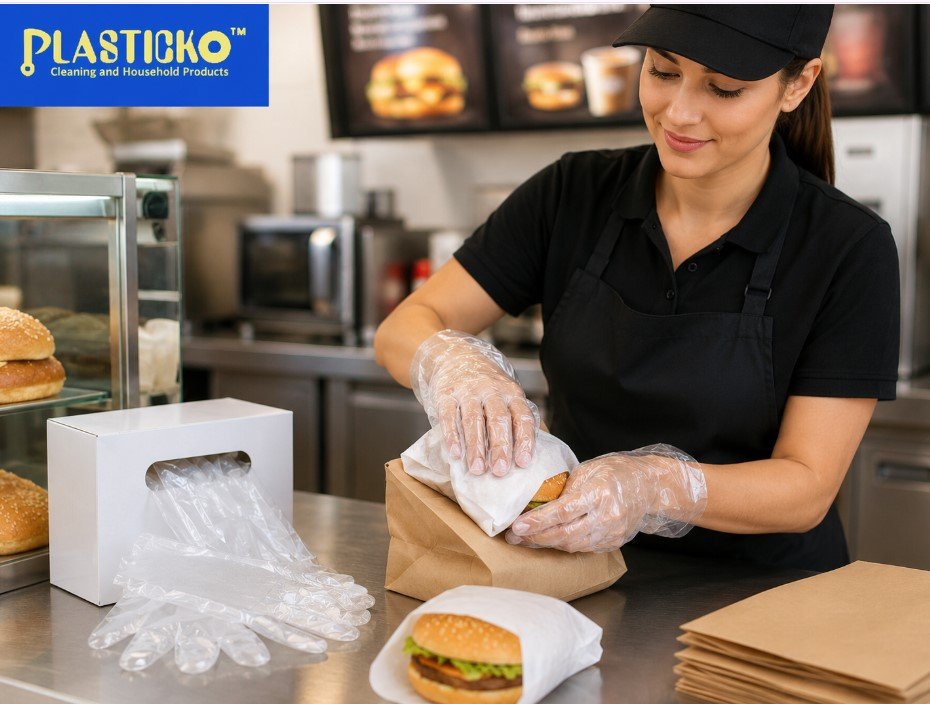
Store unopened glove cartons in a clean, dry and clearly designated hygiene area away from sunlight, heat, moisture, pests and chemicals. Keep cartons off the floor, rotate stock by delivery date and inspect packaging before issue. Branch teams should record opening dates and unusual damage so managers can identify handling problems, maintain consistent supply and reduce avoidable waste across restaurants, warehouses and cleaning operations.
Create a Clean Storage Zone
Store unopened glove cartons in a designated hygiene area rather than beside waste, chemicals or wet cleaning equipment. The space should be dry, clean and protected from dust and pests. Clear zoning helps staff understand that disposable gloves are controlled hygiene supplies, not general items that can be left on any shelf.
Protect Gloves from Heat and Sunlight
Excessive heat and direct sunlight can weaken packaging and may affect the glove material over time. Avoid windows, hot vehicles, boiler rooms and unventilated roof-level stores. Where summer temperatures are high, review storage conditions and rotate stock more frequently rather than assuming sealed cartons are protected indefinitely.
Keep Cartons Off the Floor
Use shelving, racks or pallets so cartons are easier to inspect and less exposed to water, dirt and pest activity. Leave space around stock for cleaning and visual checks. Floor clearance also reduces accidental crushing and makes first-in, first-out rotation simpler for busy restaurant, hotel and institutional stores.
Apply First-In, First-Out Rotation
Mark the receipt date on each carton and issue the oldest acceptable stock first. FIFO reduces the chance that packets remain forgotten behind new deliveries. It also supports traceability because managers can connect a quality complaint with a receipt date, batch or supplier shipment.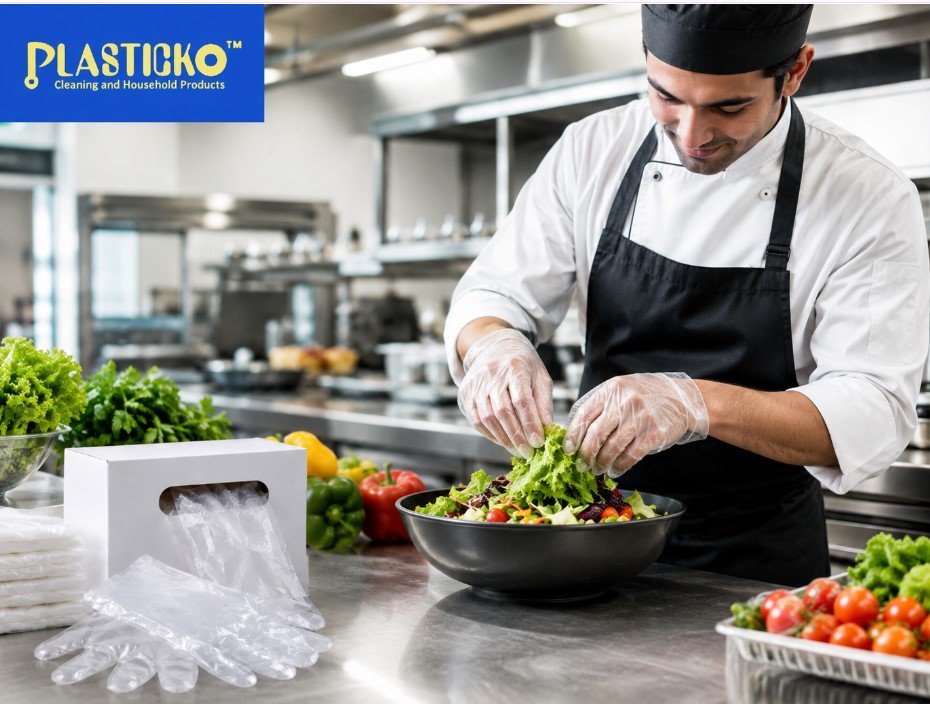
Control Open Packets
Once a packet is opened, keep it in a clean dispenser or protected location near the point of use. Do not place loose gloves on counters where splash, dust, food debris or frequent hand contact can contaminate them. The dispenser should allow one glove to be removed without touching the remaining supply.
Wash and Dry Hands Before Use
Gloves are not a replacement for hand hygiene. Staff should follow the site’s handwashing procedure and dry hands before donning, because moisture can make gloves harder to wear and encourage skin irritation. Clean hands also reduce the contamination that may spread when a glove tears or is removed incorrectly.
Choose the Correct Task
Use basic PE gloves only for tasks that match their light-duty, disposable design. Do not assign them to hazardous chemical cleaning, sharp waste, hot food equipment, medical procedures or heavy mechanical work. Supervisors should make suitable alternative gloves available rather than expecting employees to improvise.
Change Gloves at the Right Moments
Replace gloves after touching money, phones, doors, waste, raw food, contaminated surfaces or personal items, and whenever the material tears. A worker moving between tasks should remove the old pair, perform required hand hygiene and wear a fresh pair. Long wear time is not a sign of economy when contamination spreads.
Remove Gloves Without Spreading Contamination
Pinch the outer glove near the wrist, peel it away from the hand and contain it without touching the contaminated exterior with bare skin. Training should be practical and repeated because hurried removal can transfer soil to hands, uniforms or nearby surfaces. Hand hygiene may still be required immediately after removal.
Avoid Washing or Reusing Disposable Gloves
Washing thin polythene gloves can damage seams, spread contamination and create a false impression of safety. These products are intended for a single task or short work sequence. Where glove waste is excessive, redesign the workflow or use utensils rather than reusing a disposable barrier.
Place Waste Bins Near Work Areas
A closed, appropriately lined bin near the workstation encourages immediate disposal and reduces the temptation to leave used gloves on counters. Select the bin and liner according to site waste rules. Staff should never place used gloves back in pockets, on equipment or beside unused supplies.
Monitor Skin Comfort and Employee Feedback
Even loose gloves can trap heat and moisture or feel uncomfortable during repeated use. Encourage staff to report irritation, poor fit and tearing. Managers may need to adjust change frequency, hand-care practices or glove material, and should seek occupational-health advice for persistent symptoms.
Inspect Stock for Damage
During weekly store checks, look for crushed cartons, open seals, moisture, discoloration, odor or pest damage. Isolate questionable stock until it is assessed rather than distributing it to multiple locations. Documenting the issue makes supplier communication and replacement decisions more effective.
Train Supervisors and Temporary Staff
Supervisors set the standard for glove use, while temporary and seasonal workers may miss normal onboarding. Use a short visual procedure covering approved tasks, hand hygiene, change triggers, removal and disposal. Observation during the first shift is more useful than relying only on a signed training sheet.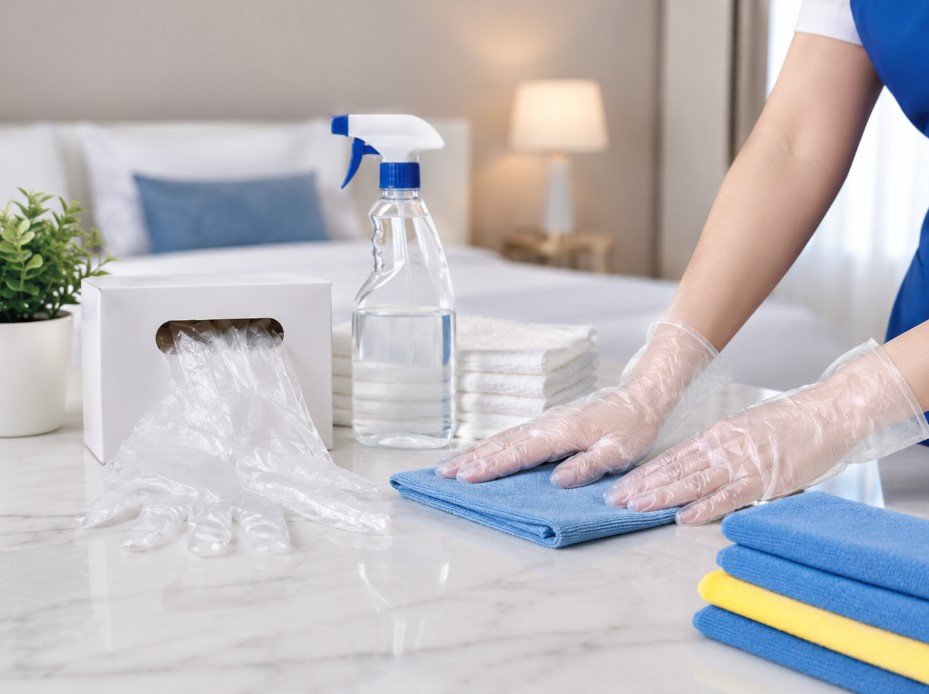
Build Safer Bulk Supply with Plasticko
When ordering from Plasticko, share storage capacity, monthly usage, delivery city and application. Request sealed, clearly counted packets and confirm the product’s intended use. A planned delivery schedule can reduce emergency stock transfers and help every branch maintain clean, protected supplies without holding excessive inventory.
Polythene Gloves Price Comparison in Pakistan
Public online listings checked in August 2026 show that prices vary by quantity, thickness, packaging, delivery charges and seller type. Use the following ranges only as a market-reference framework; Plasticko should provide a current quotation after confirming pack size, carton quantity, material and delivery city.
| Purchase Type | Typical Pack / Quantity | Indicative Market Range | Best For | Buying Note |
| Retail sample pack | 100 disposable PE gloves | PKR 70–150 | Small kitchens and testing | Confirm whether count means pieces or pairs. |
| Large retail bundle | 300–500 gloves | PKR 250–650 | Cafes and light daily use | Compare price per 100 pieces. |
| Wholesale carton | Multiple packets/carton | Request current quote | Restaurants, caterers, distributors | MOQ, thickness and freight change final rate. |
| Custom B2B supply | Scheduled repeat orders | Quote-based | Chains and procurement teams | Ask about consistency, packing and delivery plan. |
Important: polythene gloves are generally intended for light-duty, non-sterile and single-use tasks. Buyers should not treat basic PE gloves as a substitute for certified medical, chemical-resistant, cut-resistant or heat-resistant gloves.
Related Products and Helpful Buying Resources
Use this single bullet section to build contextual internal links for users who are planning a complete hygiene, food-service or waste-management order:
- Plastic Serving Tray for Restaurants and Fast-Food Service
- Eco-Friendly Garbage Bags 18×24
- Eco-Friendly Garbage Bags 24×36
- Heavy-Duty Garbage Bags 36×48
- Wet Floor Caution Sign
- 70L Pedal Dustbin for Commercial Waste
- Wholesale Cleaning and Hygiene Supply Support
- Polythene Gloves Product Page
- How to Choose Polythene Gloves for Food Handling
- Polythene Gloves vs Nitrile and Latex Gloves
- Disposable Polythene Gloves Buying Guide Pakistan
FAQs About Polythene Gloves
Q1. What are polythene gloves used for?
Polythene gloves are commonly used for short food-handling, serving, packing, cleaning and hygiene tasks where workers need a quick disposable barrier. Suitability depends on the exact task, glove thickness, contact time and workplace rules.
Q2. Are disposable PE gloves suitable for food handling?
They can be appropriate for light food-contact tasks when the supplied product is food-contact suitable and used under a documented hygiene procedure. Staff must change gloves between tasks and continue proper handwashing.
Q3. Are polythene gloves medical gloves?
Standard polythene gloves are usually non-sterile, loose-fitting and intended for general light-duty use. They should not be described or purchased as medical examination gloves unless the product carries the required certification and specification.
Q4. How many gloves are normally supplied in one pack?
A common market pack contains 100 pieces, although 200, 300, 500-piece bundles and wholesale cartons are also available. Procurement teams should confirm whether a listing counts individual gloves or pairs.
Q5. Are transparent polythene gloves powder-free?
Many PE gloves are powder-free because their loose shape and embossed surface help users put them on quickly. The buyer should still confirm the actual specification instead of assuming every transparent glove has identical features.
Q6. Can polythene gloves be reused?
Disposable polythene gloves are designed for one task or one short work sequence. Reusing them can transfer contamination, weaken the material and undermine hygiene controls, so they should be discarded responsibly after use.
Q7. Which size should a business order?
Many disposable PE gloves use a loose universal or large fit, but sizing varies by supplier. Request dimensions or a sample when staff comfort, dexterity and speed are important for repeated daily operations.
Q8. What is the wholesale price of polythene gloves in Pakistan?
Wholesale pricing depends on material grade, thickness, pieces per pack, packets per carton, MOQ, freight and order frequency. A quotation should state all these details so buyers can compare the true cost per 100 gloves.
Q9. Can these gloves protect against chemicals or sharp objects?
Basic PE gloves are not designed for hazardous chemicals, blades, punctures, high heat or heavy mechanical work. Use task-specific certified protective gloves after a workplace risk assessment for those hazards.
Q10. How can I order polythene gloves in bulk from Plasticko?
Share the required quantity, pack size, intended use, delivery city and preferred schedule through Plasticko’s wholesale quotation channel. Ask for current specifications, availability, MOQ, dispatch time and payment terms before approval.