

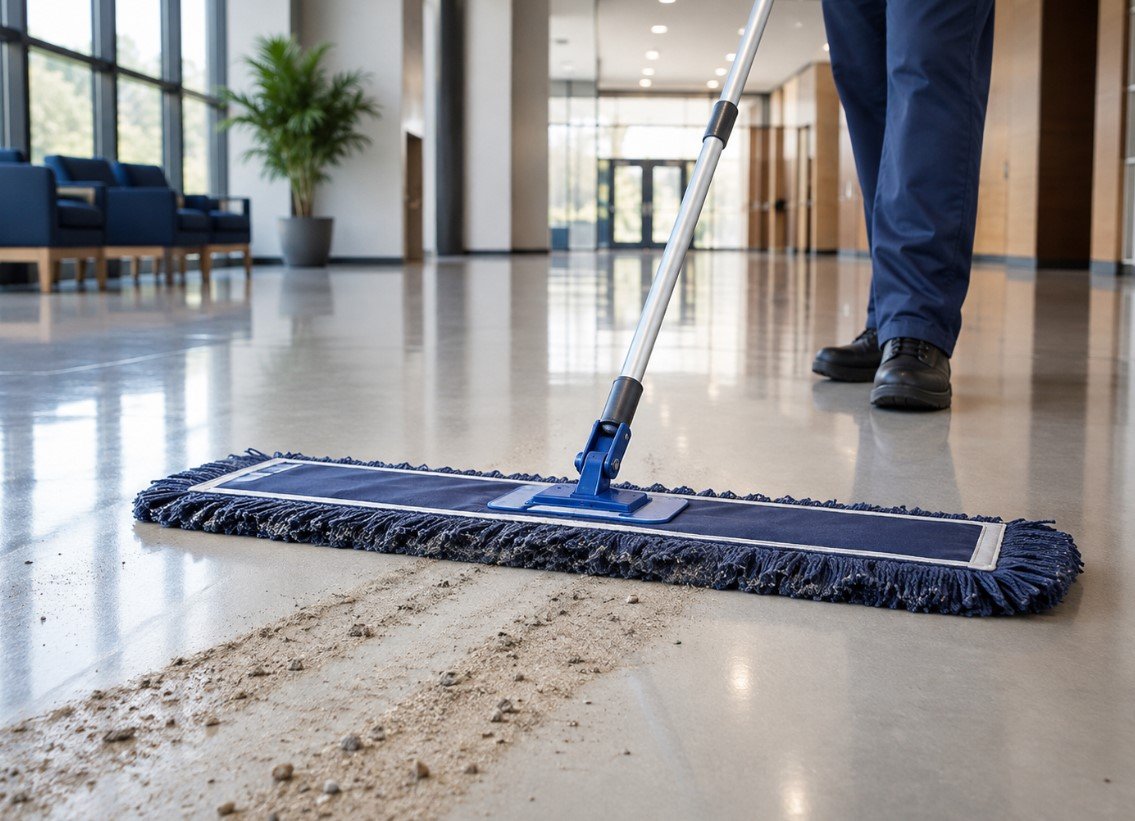
Wet mop vs dry mop is not a competition in which one tool replaces the other. They solve different cleaning problems and often work best in sequence. A dry mop targets loose soil, fibres and dust without adding water, while a wet mop uses controlled moisture to lift spills, stains and adhered dirt. This comparison helps facility managers decide when to use each method, how to train staff and which sizes or GSM options belong in the purchasing plan. It also covers common mistakes that increase streaking, labour and refill consumption.
Wet Mop vs Dry Mop: The Core Operational Difference
The central difference is the type of contamination being removed. A dry mop is designed for loose material resting on the surface, whereas a wet mop is used when soil must be dissolved, loosened or absorbed with water and an approved cleaning solution. Starting with the wrong method can spread debris or create mud. A simple inspection of the floor before work helps the cleaner choose dry removal, damp cleaning, full wet mopping or a combination.
When a Dry Mop Is the Better First Step
Use a dry mop when the floor contains dust, hair, lint, sand or light dry debris. It is especially valuable in entrances, office corridors, gyms, classrooms, retail spaces and warehouses. Wide dust mops can cover open floors faster than a small broom and may reduce the amount of airborne dust when used properly. The refill must be emptied or changed before it becomes overloaded, otherwise captured soil may be released back onto the floor.
When a Wet Mop Is Needed for Effective Cleaning
Use a wet mop for spills, sticky marks, food soil, tracked-in mud and routine washing of compatible hard floors. The head should be damp enough to clean but not so saturated that it leaves standing water. An effective wringer makes this control easier. Staff should change solution according to the site procedure rather than continuing with heavily soiled water. Wet mopping is a cleaning stage, not a substitute for removing large debris first.
How a Two-Step Wet and Dry Floor Mop Process Works
A professional two-step process begins with signs or barriers where required, followed by dry removal in overlapping passes. Debris is collected, the dry refill is cleaned, and the floor is inspected for spots. The cleaner then prepares the approved solution, wrings the wet mop to the required moisture level and works from cleaner areas toward dirtier sections. This sequence reduces solution contamination and creates a clearer standard for training and supervision.
Wet Mop GSM Compared with Dry Mop Width
Wet mop capacity is often compared by GSM, while dry mop productivity is often compared by width. A 400, 450 or 500 GSM wet mop changes handling weight and liquid capacity. A 24, 36 or 60 inch dry mop changes floor coverage and turning space. These measurements describe different performance factors, so buyers should not treat them as equivalent. The correct combination depends on floor area, obstacles, soil level and the cleaning route.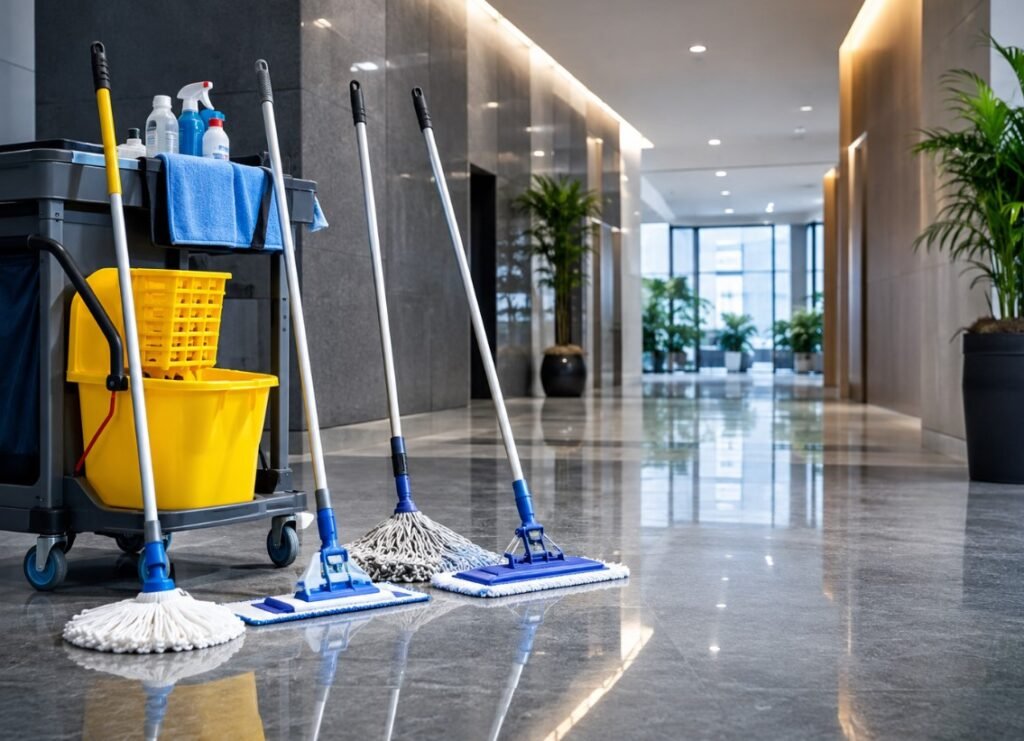
Wet Mop Advantages for Spill and Soil Removal
The main wet mop advantage is the ability to apply controlled moisture and absorb loosened soil. Cotton yarn offers familiar handling and can work with common wringer systems. Wet mops are versatile across hospitality, healthcare, food service and institutional cleaning when used on suitable floors. Their limitations include drying requirements, odour risk if stored wet and the potential for slippery surfaces when too much solution is applied. Training and equipment control address many of these issues.
Dry Mop Advantages for Speed and Dust Control
The main dry mop advantage is efficient collection of loose contamination without preparing a cleaning solution. Wide frames can cover significant space, and removable refills allow laundering or replacement. Dry mopping can reduce the soil load before wet work and may protect floors from abrasive grit. Its limitation is that it cannot dissolve sticky or greasy residue. Staff should recognise when dry passes are complete and a damp or wet method is still needed.
Wet Mop Refill and Dry Mop Refill Replacement Signs
Replace or retire a wet mop refill when yarn is badly worn, stitching fails, the attachment is damaged, absorbency declines or persistent odour remains after proper washing. Replace a dry mop refill when the backing no longer fits securely, fibres are matted or the cover fails to capture dust. A dated inspection routine prevents damaged refills from staying in circulation simply because no one owns the replacement decision.
Comparing Labour Time for Wet Mop vs Dry Mop
Dry mopping normally requires less setup because no solution is mixed, but it may be only the first stage. Wet mopping takes more preparation, rinsing, wringing and drying control. Labour comparison should therefore look at the entire cleaning outcome rather than the speed of a single pass. In dusty buildings, removing soil dry first can reduce repeat wet passes. In spill response, going directly to a controlled wet mop may be the fastest suitable action.
Comparing Water and Chemical Use for Commercial Mops
A dry mop uses no cleaning solution during the pass, while wet mopping consumes water and, where approved, chemical. Over-wetting wastes solution, extends drying time and can increase slip risk. Under-wetting may fail to loosen soil. Wringer performance, mop GSM and staff technique all affect consumption. Facilities can improve control by defining dilution, bucket fill level, solution-change points and the number of square metres expected from one prepared batch.
Using Wet Mop and Dry Mop in Hotels and Restaurants
Hotels need dry mops for corridors and public spaces plus wet mops for scheduled floor washing and spill response. Restaurants must remove crumbs and dry debris before treating grease-related soil or spills. Separate equipment may be needed for kitchens, dining rooms and washrooms. Compact sizes improve movement around furniture, while larger dry mops support banquet halls and open lobbies. The purchasing plan should reflect these zones rather than relying on one universal mop.
Using Commercial Mops in Hospitals and Clinics
Healthcare facilities should follow their own infection prevention procedures, approved disinfectants and zone controls. Wet mop and dry mop equipment may be dedicated by area, labelled and processed according to policy. Reusable refills require reliable laundering and complete drying. Buyers should prioritize compatible systems, easy inspection and adequate backup quantities. Product claims should never replace the facility’s clinical guidance, occupational safety rules or documented cleaning protocols.
Using Industrial Floor Mops in Factories and Warehouses
Factories and warehouses often favour wide dry mops for dust and light debris on open surfaces, followed by wet cleaning in selected zones. A 60 inch dry mop can be productive where aisles are broad, but smaller widths may be required around machinery and shelving. Heavy wet mops can support demanding areas, provided the bucket and wringer handle the weight. Industrial buyers should also consider chemical exposure, rough surfaces and frequency of replacement.
Wet Mop vs Dry Mop Cost Comparison in Pakistan
Wet mop refills are generally lower-cost individual items, while complete wide dry mop sets can cost more because they include frames and handles. However, lifecycle cost depends on laundering, replacement frequency, staff time and the number of square metres cleaned. Pakistan market rates vary widely by specification. A fair comparison should separate refill price from complete-set price and confirm whether freight, tax or packaging is included in the supplier’s quotation.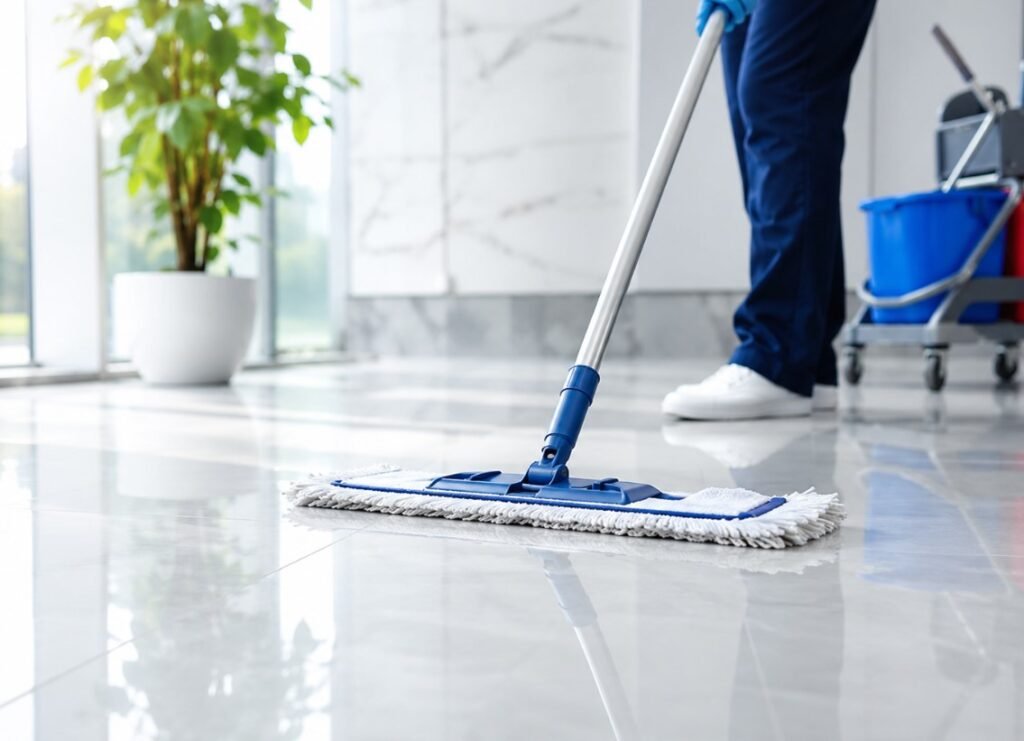
Build a Combined Wet Mop and Dry Mop Standard
The strongest result is usually a written standard that tells staff which mop to use, in what sequence, with which bucket, on which floor and how to process the refill afterward. Include approved sizes, GSM, colour coding, replacement signs and storage rules. This makes purchasing and training reinforce each other. A combined standard also helps supervisors identify whether a quality issue comes from the product, the technique, the solution or an unrealistic cleaning schedule.
Wet Mop and Dry Mop Market Price Comparison in Pakistan
| Product Type | Common Specification | Indicative Pakistan Market Range |
| Cotton wet mop refill | 400 GSM | PKR 350–600 per piece |
| Cotton wet mop refill | 450 GSM | PKR 400–700 per piece |
| Heavy wet mop refill | 500 GSM | PKR 475–850 per piece |
| Dry/dust mop set | 24 inch | PKR 1,200–2,200 per set |
| Dry/dust mop set | 36 inch | PKR 1,600–3,000 per set |
| Industrial dry mop set | 60 inch | PKR 2,500–4,500 per set |
| Complete wet or dry mop system | Commercial grade | PKR 1,800–5,500+ per set |
Pricing note: These are indicative retail and wholesale market references. Final rates depend on yarn quality, GSM, frame material, handle, order quantity, tax, freight and delivery city. Request a current quotation before procurement.
Related Products and Helpful Wet Mop Guides
- Shop the 20L single mop bucket with wringer
- Compare the 30L heavy-duty mop bucket with wringer
- View the 46L double mop bucket with wringer
- Explore the 50L dual-chamber commercial mop bucket
- Read How to Choose Wet Mop and Dry Mop for Commercial Floors
- Read Wet Mop vs Dry Mop for Professional Cleaning Teams
- Read the Commercial Mop Maintenance and Refill Replacement Guide
- Read the Mop GSM and Dry Mop Size Buying Guide Pakistan
FAQs About Wet Mop and Dry Mop
Q1. What is the difference between a wet mop and dry mop?
A dry mop removes loose dust, hair and grit without water, while a wet mop uses controlled moisture to loosen and absorb spills, stains and adhered soil. Many commercial teams use the dry mop first and the wet mop second.
Q2. Which wet mop GSM is best for commercial cleaning?
The best GSM depends on floor area, soil level, staff comfort and wringer size. A 400 GSM mop suits lighter routine work, 450 GSM offers balanced capacity, and 500 GSM supports larger or more demanding areas.
Q3. Which dry mop size should I choose?
Choose 24 inch for rooms and narrow routes, 36 inch for corridors and medium open floors, and 60 inch for warehouses or broad industrial areas. Always confirm turning space, storage and refill availability.
Q4. Can I buy only a wet mop refill?
Yes, when the refill attachment matches your existing handle or holder. Confirm socket, clip, fitting and wringer compatibility before ordering so the replacement head can be used without modification.
Q5. How often should a commercial mop refill be replaced?
Replace it when yarn or fibres are badly worn, stitching fails, attachment becomes loose, absorbency or dust capture declines, or odour remains after proper laundering. Usage and washing conditions determine the actual schedule.
Q6. How should wet mop heads be stored?
Rinse and wash them according to the approved procedure, then dry them completely in a ventilated area. Store clean refills off the floor and never leave a wet mop standing in dirty bucket water.
Q7. Is a dry mop better than a broom?
A dry mop can cover broad smooth floors and hold fine dust more effectively than pushing it into a pile, but the best tool depends on the debris and surface. Large particles may still need separate collection.
Q8. What affects mop price in Pakistan?
Price changes with GSM, width, yarn and backing quality, frame and handle material, whether the item is a refill or complete set, order quantity, packaging, tax, freight and delivery city.
Q9. Do you supply wet mop and dry mop products in bulk?
Plasticko supports bulk and wholesale enquiries for hotels, hospitals, restaurants, schools, factories, cleaning contractors, facility managers, wholesalers and distributors across Pakistan.
Q10. How can I request a quotation for commercial mops?
Share the required GSM or width, refill or complete set, quantity, delivery city, business type and any colour-coding or packaging needs. This allows the supplier to prepare a more accurate quotation.