
Keeping commercial floors clean does not always require water, detergent or a full wet-mopping process. In many hotels, offices, educational buildings, warehouses and institutional facilities, the first cleaning requirement is simply removing loose dust, hair, lint and lightweight debris efficiently. A Dry Mop Cotton can support that everyday maintenance stage while allowing cleaning teams to cover hard-floor areas without unnecessarily wetting the surface.
Plasticko currently includes Dry Mop Cotton as a separate product within its Dry Mop range, alongside Dry Mop Refill, Dry Mop Acrylic Blue and size-based options from 24 to 60 inches.
For commercial buyers, the main decision is not whether cotton is universally better than every alternative. The more useful question is whether cotton suits the facility’s floor material, cleaning frequency, mop-frame system, laundering or maintenance process and staff workflow.
Why Cotton Dry Mops Remain Useful in Professional Cleaning
Dry floor cleaning has a different purpose from wet cleaning.
A dry mop is primarily used to collect loose contamination before it becomes ground into the surface or spread through traffic.
This can include:
- Dust
- Hair
- Lint
- Fine particles
- Light packaging debris
- Dry soil
For routine housekeeping, removing this material before wet mopping can reduce the amount of contamination transferred into cleaning solution.
Dry Cleaning Before Wet Cleaning
One of the most practical workflows is a two-stage process.
First, use a dry mop to collect loose soil.
Second, wet mop only where washing, stain removal or soil suspension is required.
This approach can reduce unnecessary water use and help the wet mop remain cleaner for longer.
Dry Mop Cotton for Hotels and Hospitality Properties
Hotels have several floor types and cleaning zones.
Guest corridors, lobby sections, conference areas, service passages and staff rooms may accumulate fine dust throughout the day even when no visible liquid soil is present.
A cotton dry mop allows housekeeping or janitorial teams to perform quick maintenance passes without turning every cleaning round into a wet-floor operation.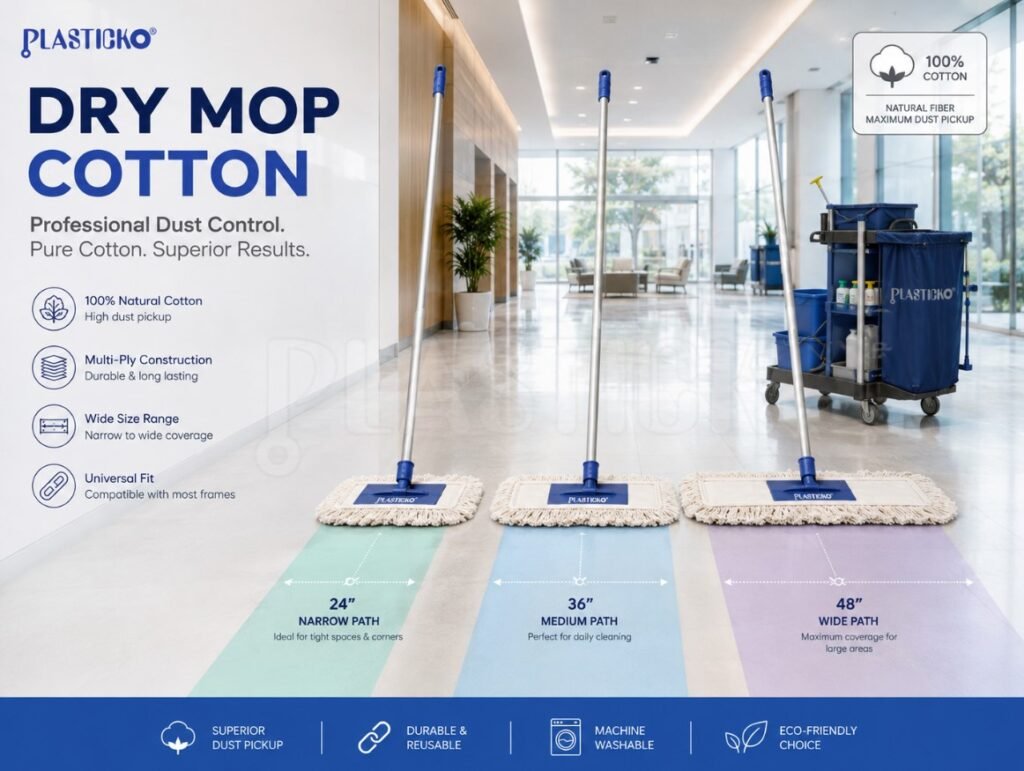
Supporting Quiet Maintenance
Dry mopping can be particularly useful where facilities want to minimize disruption.
Unlike some powered equipment, a manual cotton mop can be used quietly in corridors and other suitable areas.
This can matter in hotels where guest experience influences cleaning schedules.
Cotton Dry Mop for Offices and Corporate Buildings
Office facilities commonly have open-plan workspaces, corridors, meeting rooms, entrances and cafeterias.
Loose dust can accumulate under desks, around partitions and in lower-traffic corners.
A narrower or medium-width cotton dry mop can help staff maneuver around furniture while wider variants may be more efficient in open halls.
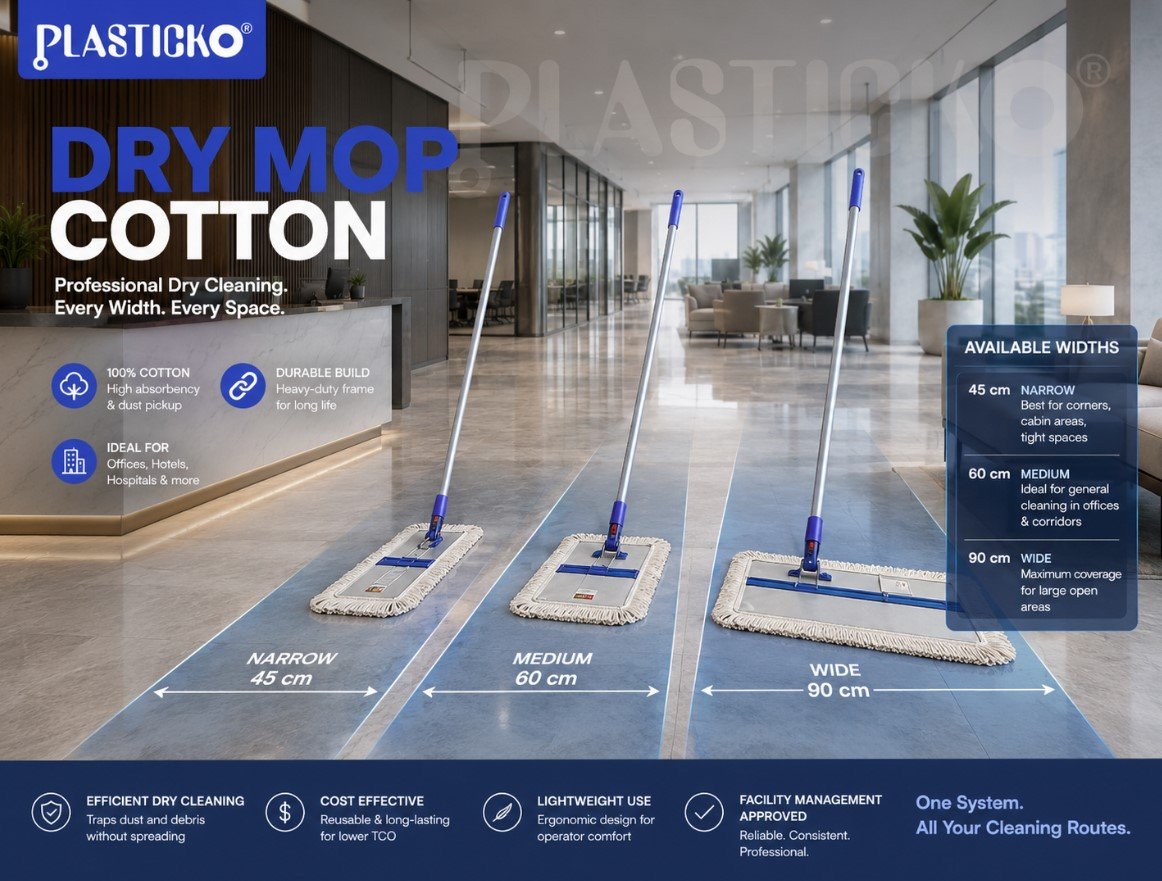
Plasticko currently offers Dry Mop size categories including 24, 36, 40, 46 and 60 inches, which makes width selection an important part of procurement.
Schools, Colleges and Universities
Educational facilities often combine small classrooms with large halls and long corridors.
One mop width may not be ideal for every zone.
A facilities team may choose a compact dry mop for classrooms and wider dry mop systems for corridors or halls.
The cotton mop head can support routine dust removal before scheduled wet cleaning or machine cleaning.
Cleaning Around Furniture
Desks, chairs, benches and cabinets create obstacles.
In such areas, maneuverability can be more valuable than maximum mop width.
Buyers should therefore compare floor layout rather than ordering the widest option simply because it appears more productive.
Dry Mop Cotton for Warehouses and Storage Facilities
Warehouses commonly have large open floor areas, but they can also contain shelving, pallets and equipment routes.
A cotton dry mop can be useful for suitable dry-floor housekeeping where the main issue is loose dust rather than oil, chemicals or wet contamination.
For broad aisles, wider mop heads may reduce the number of passes required.
Know the Limits of Dry Mopping
Dry mopping should not be used as a substitute for specialist cleaning where hazardous dust, industrial chemicals, oils or regulated contamination are present.
The correct cleaning method must follow the facility’s safety procedure.
Cotton Versus Acrylic Dry Mop
Commercial buyers often compare cotton and acrylic options.
Neither material is automatically superior.
| Comparison Point | Cotton Dry Mop | Acrylic Dry Mop |
|---|---|---|
| Fiber type | Natural cotton | Synthetic acrylic |
| Cleaning style | Traditional dry dusting | Synthetic dust collection |
| Common use | Routine floor maintenance | Routine commercial dusting |
| Care requirements | Depends on construction | Depends on construction |
| Best choice | Facility-specific | Facility-specific |
Plasticko currently maintains separate Dry Mop Cotton and Dry Mop Acrylic Blue categories, allowing buyers to evaluate both materials.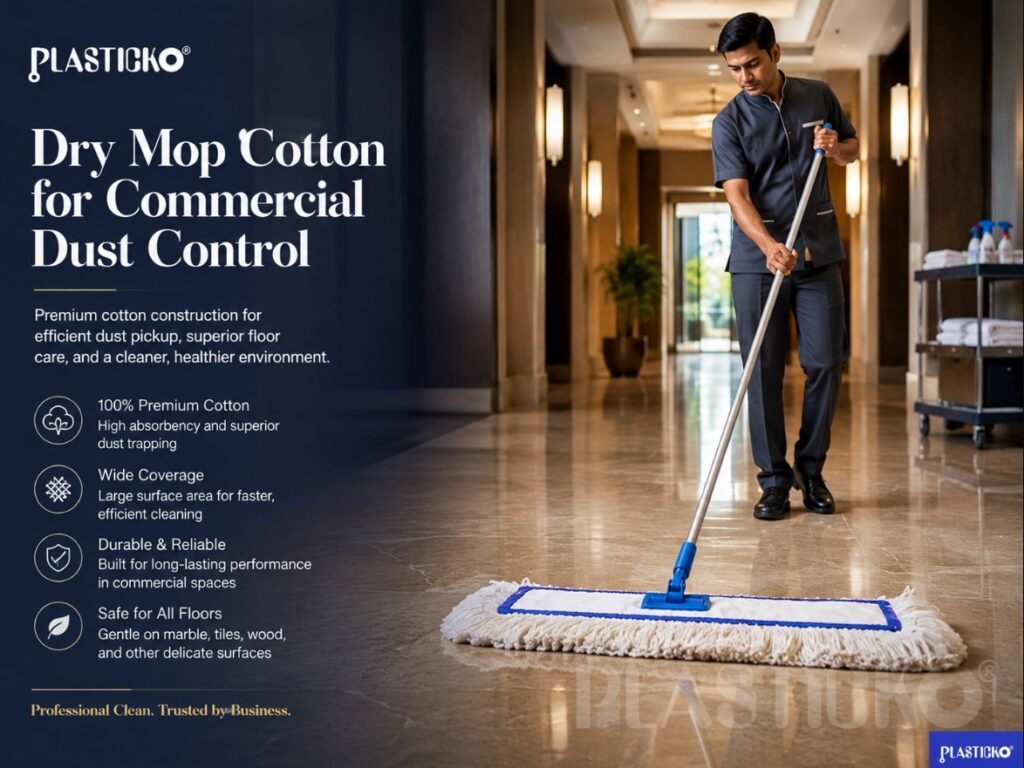
How Mop Width Changes Productivity
Width is one of the most important factors in dry-mop selection.
A wider mop can cover more floor in one pass, but it can become harder to maneuver around furniture and narrow spaces.
24 Inch
Useful for tighter commercial areas, offices, classrooms and smaller corridors.
36 to 40 Inch
These middle widths may provide a good compromise between coverage and maneuverability.
46 to 60 Inch
These wider options can be attractive in halls, warehouses and large open areas.
The best width should be determined by the actual floor plan.
Dry Mop Cotton Refill Planning
Commercial facilities should treat mop heads as replaceable operational stock.
If a frame and handle remain serviceable, replacing only the mop head can often be more practical than replacing the entire system.
Before ordering a refill, confirm:
Frame dimensions
Attachment method
Required width
Material preference
Cleaning procedure
Quantity
This prevents incompatible replacement purchases.
Maintenance of Cotton Dry Mop Heads
Dry mops collect fine particles, so they need regular processing.
The exact cleaning method depends on product construction and supplier instructions.
Businesses should avoid returning a heavily contaminated mop directly to the floor without proper maintenance.
Useful Inspection Points
Check for:
- Excessive fiber loss
- Torn backing
- Damaged attachment points
- Persistent contamination
- Reduced dust collection
- Loss of shape
A damaged dry mop may spread debris rather than capture it effectively.
Using Dry Mop Cotton as Part of a Two-Step Cleaning Program
Dry and wet mopping should not be treated as competitors.
A practical professional routine can be:
Step 1: Dry mop the floor to remove loose soil.
Step 2: Inspect for adhered marks or spills.
Step 3: Wet mop only areas requiring washing.
Step 4: Allow the floor to dry.
Step 5: Process and store equipment correctly.
This method can reduce unnecessary wet cleaning.
Labour Efficiency and Cleaning Routes
A commercial mop should help staff complete predictable cleaning routes.
Facility managers can measure:
- Floor area completed per shift
- Number of passes
- Time spent moving furniture
- Frequency of mop-head cleaning
- Replacement rate
- Staff feedback
These factors provide a better picture of productivity than mop price alone.
Choosing Cotton Dry Mop Equipment for B2B Buyers
Commercial procurement teams should document the intended application before requesting quotations.
Floor Area
Larger areas may justify wider mop heads.
Building Type
A warehouse and a hotel corridor do not have the same cleaning requirements.
Frame Compatibility
Verify the refill fits current equipment.
Quantity
Include active stock plus replacement inventory.
Repeat Requirement
Cleaning contractors and institutions may need recurring supply.
Plasticko positions its wholesale service toward hotels, hospitals, restaurants, cleaning companies, wholesalers, distributors and other commercial buyers.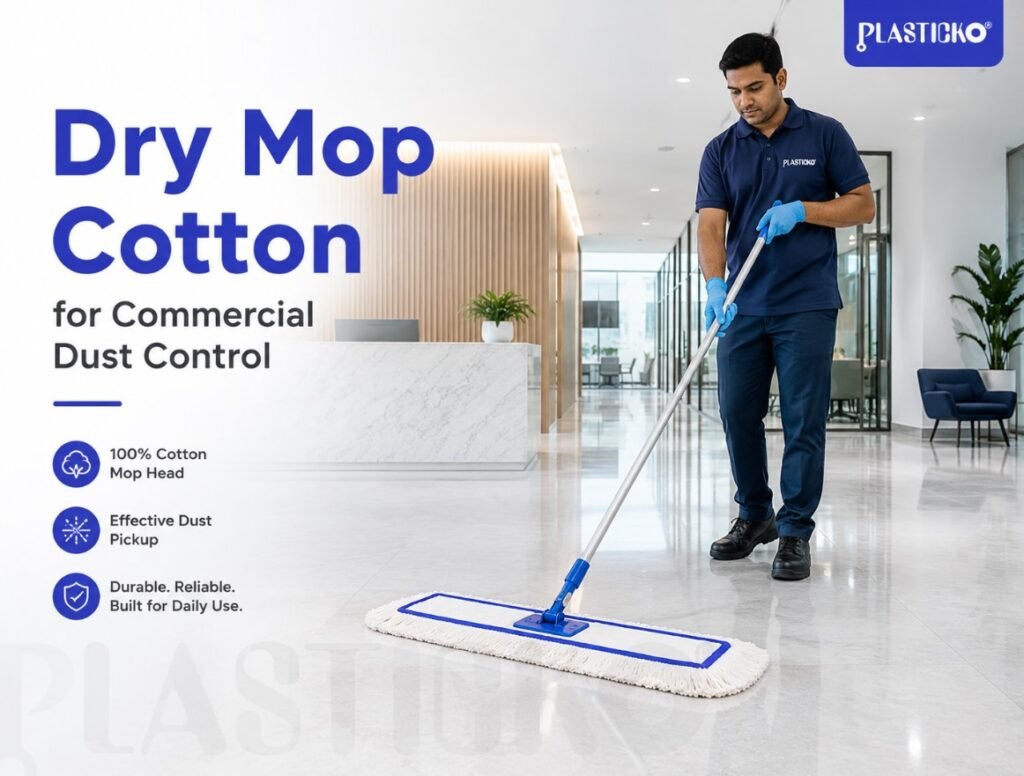
Cotton Dry Mop Price in Pakistan
Plasticko’s current Dry Mop Cotton page does not publish a fixed universal price; instead it notes that pricing varies by size, material weight, construction, refill-versus-complete configuration and order volume.
A practical B2B comparison should include:
| Cost Factor | Why It Matters |
|---|---|
| Width | Larger heads may cost more |
| Refill or complete set | Changes total price |
| Fiber construction | Affects specification |
| Order quantity | Influences wholesale pricing |
| Packaging | Important for distributors |
| Freight | Changes landed cost |
| Replacement rate | Affects annual consumption |
For bulk buying, request a current quotation based on the exact specification rather than relying on generic retail estimates.
Wholesale Buying Strategy
Before requesting a quotation, prepare:
Required mop width
Cotton specification
Refill or complete mop
Quantity
Delivery city
Expected repeat order
Compatibility requirement
This allows the supplier to respond with a more relevant commercial offer.
Related Blog Articles
Use internal links in the same visual style as your screenshot:
- Wet Mop vs Dry Mop for Professional Cleaning Teams
- How to Choose Wet Mop and Dry Mop for Commercial Floors
- Commercial Mop Maintenance and Refill Replacement Guide
- Mop GSM and Dry Mop Size Buying Guide Pakistan
- Dry Mop vs Dust Mop for Commercial Floor Cleaning
Where a related article is already published, link to its live Plasticko URL. For future articles, add the internal link after publication.
Related Products
- Dry Mop Cotton
- Dry Mop Acrylic Blue
- Dry Mop 24 Inch
- Dry Mop 36 Inch
- Dry Mop 40 Inch
- Dry Mop 46 Inch
- Dry Mop 60 Inch
- Dry Mop Refill
Plasticko’s catalog currently lists all of these product families under its Dry Mop range.
Final Buying Recommendation
A Dry Mop Cotton is a practical choice for commercial facilities that need routine removal of loose dust, lint, hair and lightweight debris without wetting the floor during every cleaning pass.
Hotels, offices, schools, institutions, warehouses and professional cleaning contractors should choose the product based on floor layout, mop width, compatible frame and expected cleaning frequency.
For B2B procurement, avoid buying on material name alone.
Confirm the construction, attachment method, width, replacement availability and total delivered cost.
The best cotton dry mop system is one that integrates easily into the cleaning team’s existing workflow and can be replaced consistently when the head reaches the end of its usable service life.
FAQs About Dry Mop Cotton
1. What is Dry Mop Cotton used for?
It is mainly used to collect loose dust, hair, lint and lightweight dry debris from suitable hard-floor surfaces.
2. Can cotton dry mops be used in hotels?
Yes, they can support routine dry-floor maintenance in suitable hotel areas such as corridors, halls and service sections.
3. Is Dry Mop Cotton suitable for offices?
Yes. It can be particularly useful for removing loose dust from hard floors without performing a full wet-cleaning cycle.
4. Is cotton better than acrylic for dry mopping?
Not universally. The preferred material depends on the facility’s floor, maintenance system and procurement preferences.
5. What mop width should I choose?
Choose according to floor layout. Smaller widths are easier around furniture, while wider heads can cover open floors faster.
6. Can the cotton mop head be replaced separately?
If the existing frame is compatible with a refill, replacing only the head can be practical.
7. How should a cotton dry mop be maintained?
Follow the supplier’s care instructions, remove accumulated soil and inspect the backing and fibers regularly.
8. Can Dry Mop Cotton be bought in bulk?
Yes. Plasticko currently supports wholesale and commercial purchasing enquiries.
9. What affects Dry Mop Cotton price?
Width, material, construction, quantity, packaging, freight and whether the order is for a refill or complete system can all affect price.
10. What should a commercial buyer confirm before ordering?
Confirm mop width, material, frame compatibility, quantity, delivery city, replacement requirement and whether the order will be recurring.