
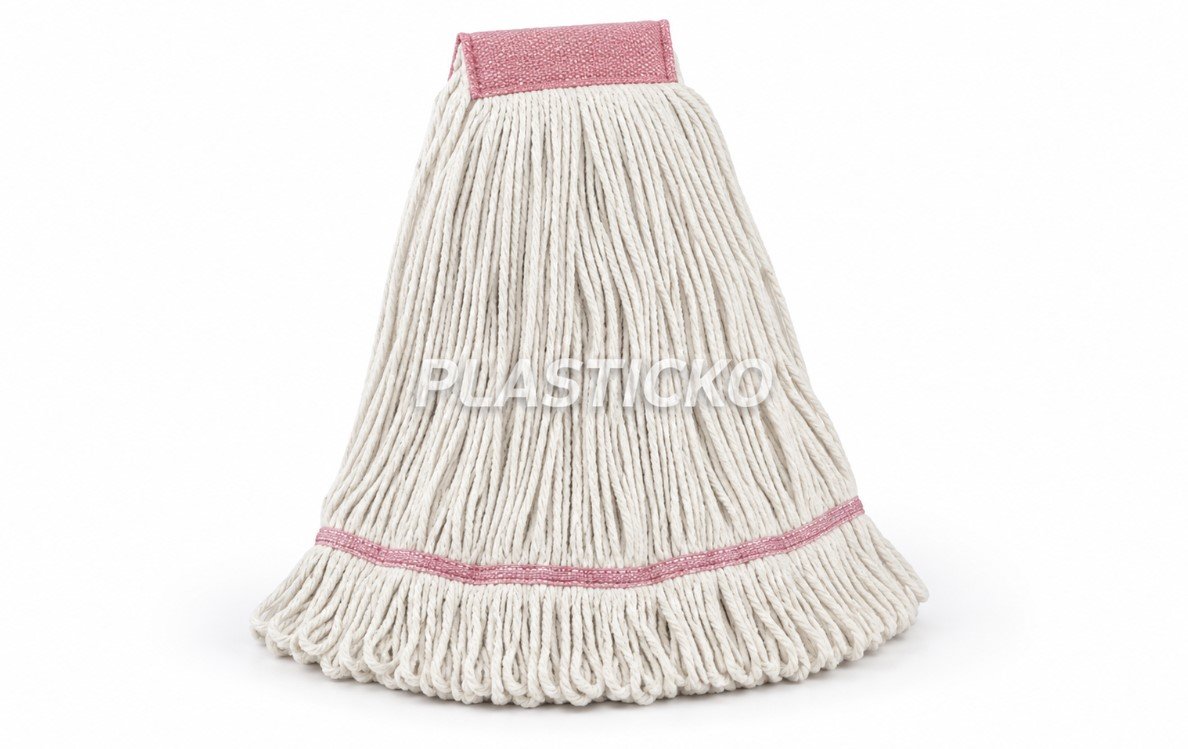
Large facilities need cleaning tools that perform consistently across multiple shifts, departments and floor zones. A Wet Mop 550g can suit organizations moving beyond light everyday maintenance toward a more substantial manual floor-care system.
The real advantage of a heavier mop category is not simply that it contains more material. Procurement teams should evaluate whether the working capacity aligns with floor size, soil load, staff strength, cleaning frequency and bucket configuration.
Plasticko currently markets the Wet Mop 550g for hotels, hospitals, restaurants, factories, schools and professional cleaning contractors, and its product page emphasizes comparing neighboring weight variants rather than assuming one specification fits every task.
Why Facility Managers Consider 550g Mop Heads
Facility management teams often oversee very different spaces inside a single property.
A hospital campus may contain corridors, administrative offices, waiting areas and utility sections. A hotel may contain banquet halls, service passages and kitchens. A factory may include office areas, warehouses and staff facilities.
A 550g wet mop can become part of the general floor-care toolkit when cleaning areas are large enough to justify additional working capacity.
Heavier Does Not Automatically Mean More Efficient
An important procurement mistake is assuming that the heavier mop always cleans faster.
A heavier mop may carry more liquid or offer more contact material, but it can also require greater effort during wringing and movement.
Efficiency depends on the relationship between product, operator and floor.
Institutional Cleaning Requires Standardization
Schools, hospitals, universities, government buildings and large corporate facilities often have multiple cleaning teams.
If each department purchases different mop heads and handles, replacement becomes difficult.
Standardizing approved mop specifications can simplify:
- Staff training
- Spare inventory
- Handle compatibility
- Bucket selection
- Reorder planning
- Cost comparison
The 550g option can be assigned to defined medium-heavy or high-demand routes rather than being used everywhere.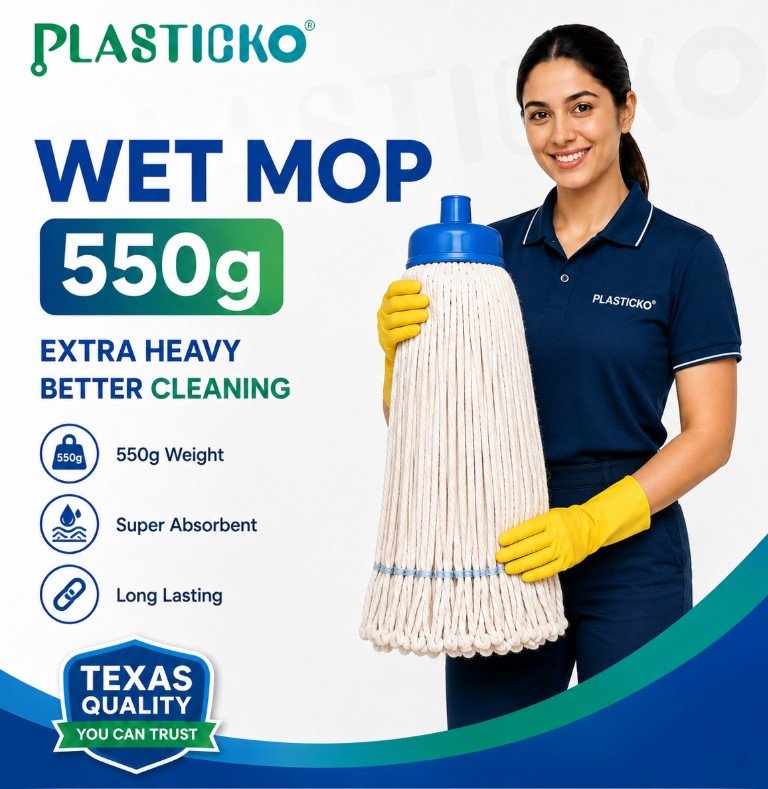
Wet Mop 550g in Large Hotels and Resorts
Hospitality properties often operate twenty-four hours a day.
Cleaning teams may work morning, evening and night shifts, making equipment rotation particularly important.
A 550g mop may be useful for back-of-house passages, larger hard-floor sections, banquet areas and other zones requiring substantial wet cleaning.
Maintain Multiple Mop Sets for Continuous Operations
A hotel should not rely on one set of mop heads that remain in continuous use.
While one set is being cleaned or dried, another can remain available.
This helps the facility avoid returning damp or insufficiently processed mops directly into service.
Wet Mop 550g for Schools and Universities
Educational campuses can contain extensive corridors and common areas.
Cleaning may take place before opening, during quieter periods and after students leave.
A heavier wet-mop category may help cleaning teams cover broad hard-floor sections, provided the working weight remains manageable.
Facility managers should also calculate how far cleaners must travel between the floor and the bucket.
A mobile bucket or trolley can reduce unnecessary walking.
Applications in Restaurants, Catering Facilities and Commercial Kitchens
Food-service businesses require careful segregation between food-handling operations and floor-cleaning equipment.
A 550g wet mop can support appropriate floor areas, but restaurants should maintain designated equipment and follow their hygiene procedures.
Grease-heavy floors may need an approved degreasing program.
Separate Equipment by Zone
Businesses can assign mop sets to:
Front-of-house areas
Kitchen floors
Washrooms
Storage/service zones
Color identification may support this system where suitable, but labels, training and documented procedures remain important.
Comparing Wet Mop 500g and Wet Mop 550g
These neighboring specifications can look almost identical to purchasing teams.
The right comparison is operational.
| Buying Consideration | 500g | 550g |
|---|---|---|
| General workload | Medium-heavy | Medium-heavy to higher demand |
| Saturated working weight | Lower comparatively | Higher comparatively |
| Large floor areas | Strong candidate | Strong candidate |
| Wringing effort | Moderate | Potentially higher |
| Staff comfort | Test on site | Test on site |
| Best decision method | Sample trial | Sample trial |
The additional 50g should not be treated as a guarantee of superior cleaning.
Should You Move Directly to a 600g Mop?
Not necessarily.
If 550g already provides the required floor coverage while staff can handle it comfortably, a heavier specification may add no operational value.
On the other hand, very large floor areas may justify testing 600g or 650g alternatives.
This creates a useful weight ladder where facilities can assign different mop heads to different cleaning routes.
Plasticko currently lists Wet Mop options from 350g through 650g.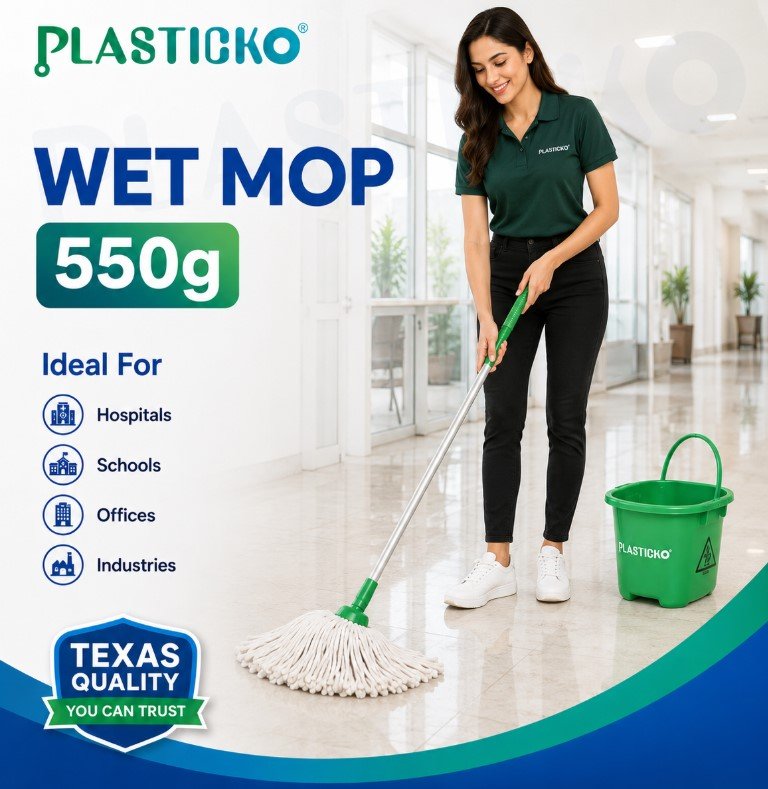
Choosing the Correct Commercial Mop Bucket
The 550g mop should be paired with a bucket that allows easy immersion and effective wringing.
For extensive cleaning routes, mobile commercial buckets can reduce staff movement.
Plasticko’s 50L double-bucket product provides separate 25-litre compartments, while its 60L system offers a higher-capacity mobile configuration.
Others Mop Buckets
These links can be placed naturally within the article rather than grouped only at the bottom.
Managing Water Consumption
Facility managers should monitor how much water is being used across each cleaning route.
Overly frequent full bucket replacement can waste resources, while excessively dirty cleaning solution can reduce cleaning quality.
The goal is controlled water management according to the organization’s procedure.
A heavier mop should not be interpreted as permission to leave more water on the floor.
Correct wringing remains essential.
Chemical Use and Cost Control
Chemical over-dosing is a common operational concern in commercial cleaning.
Facilities should use measured dilution rather than relying on staff estimation.
The mop specification and cleaning chemical should work together.
If too much detergent is used, floors can develop residue and may require additional passes, increasing labor and water consumption.
Train Staff Using Simple Visual Procedures
A cleaning-room poster can show:
Bucket fill level
Chemical dosage
Approved mop color
Wringing procedure
Cleaning zone
Post-use process
Standardized instructions are especially useful in institutions with large teams.
Building a Mop Lifecycle Program
Buying the mop is only the beginning.
A facility should know:
When the mop enters stock, where it is assigned, how often it is processed and when it is removed from service.
This does not require sophisticated software.
A simple inventory sheet can track the replacement rate by department.
Why Replacement Data Matters
If one department consistently retires 550g mop heads twice as quickly as another, the facility can investigate.
Possible reasons include:
Excessively rough flooring, incorrect laundering, inadequate drying, heavy soil, chemical exposure or inappropriate use.
This information helps procurement teams improve purchasing decisions.
Wholesale Carton and Reorder Planning
Large buyers should calculate inventory using consumption cycles.
Suppose a facility has thirty active mop heads and replaces approximately five during an average procurement period.
The reorder level should account for those replacements plus stock used during cleaning or drying cycles.
Wholesalers and distributors need a larger safety margin because they must support customer orders rather than one cleaning team.
Wet Mop 550g Market Price Reference in Pakistan
Plasticko’s current Wet Mop 550g product content places comparable Pakistan listings in a broad range of approximately PKR 650–1,700. The site also notes that heavier wet-mop refills generally contain more material and that comparisons should use the same specification and unit basis. This is indicative market context, not a fixed Plasticko selling price.
| Purchasing Scenario | Indicative Position | Main Variable |
|---|---|---|
| Standard 550g refill | PKR 650–1,700 market context | Yarn/construction |
| Wholesale cartons | Request quotation | MOQ |
| Recurring institutional order | Negotiated quote | Volume/frequency |
| Mop + handle/bucket | Higher total system cost | Included components |
Final prices can vary with order size, material, packaging, freight, tax, city and current stock.
Quality Checks Before Approving a Large Order
Do not rely only on a product photo.
Inspect a representative sample for:
Material consistency
Attachment strength
Stitching or finishing
Dimensions
Weight consistency
Compatibility with existing holders
Wringing performance
Performance after repeated normal use
Plasticko’s current product guidance similarly recommends sample testing and checking consistency before large procurement.
Related Blog Articles
- Wet Mop vs Dry Mop for Professional Cleaning Teams
- How to Choose Wet Mop and Dry Mop for Commercial Floors
- Commercial Mop Maintenance and Refill Replacement Guide
- Mop GSM and Dry Mop Size Buying Guide Pakistan
The first two resources are currently live within the Plasticko content cluster.
Related Products
- Wet Mop 500g
- Wet Mop 550g
- Wet Mop Category
- Double Mop Bucket 50L with Wringer
- Double Mop Bucket 60L with Wringer
- Wet Mop vs Dry Mop Guide
Final Buying Recommendation for Facility Managers
A Wet Mop 550g is a logical specification to evaluate for larger commercial and institutional cleaning programs where lightweight mops may not provide the desired working capacity.
Hotels, schools, universities, restaurants, factories, facility-management companies and cleaning contractors can assess it for medium-heavy and high-frequency floor-care routes.
The buying decision should include much more than mop weight.
Confirm the actual construction, hardware compatibility, wet working weight, bucket size, staff feedback, replacement rate and landed purchase cost.
Organizations purchasing repeatedly should also approve a sample specification and keep that specification attached to future purchase orders.
That creates greater consistency than sourcing an unspecified “550g mop” from different suppliers each time.
FAQs About Wet Mop 550g
1. What is Wet Mop 550g best used for?
It can suit medium-heavy commercial and institutional wet-floor cleaning where teams need more working capacity than lighter mop categories.
2. Is 550g suitable for large buildings?
It can be, provided the floor surface, route length, staff handling and bucket system make the specification practical.
3. Can a Wet Mop 550g be used in hotels?
Yes, for suitable hotel floor areas under the property’s housekeeping procedures.
4. Can hospitals use a 550g mop?
Healthcare facilities should verify their infection-control, material and equipment requirements before approving any general commercial mop for specific zones.
5. Is 550g better than 500g?
Not automatically. The additional weight may benefit some cleaning routes but could be unnecessary for others.
6. Should a 550g wet mop be used with a trolley bucket?
For larger facilities, a mobile commercial bucket can improve workflow, but compatibility and site procedure determine the appropriate configuration.
7. How can facilities improve mop life?
Use correct chemicals, avoid inappropriate surfaces, process the mop properly after use, dry reusable heads adequately and store them cleanly.
8. What is the market price of Wet Mop 550g?
Plasticko’s current market-reference content cites a broad comparable range around PKR 650–1,700, subject to specification and buying conditions.
9. Is Wet Mop 550g available for wholesale procurement?
The product is currently positioned for bulk and wholesale commercial purchasing.
10. What should buyers include in a quotation request?
Provide quantity, exact specification, application, preferred packaging, delivery city, required date and whether the purchase is a one-time or recurring order.