

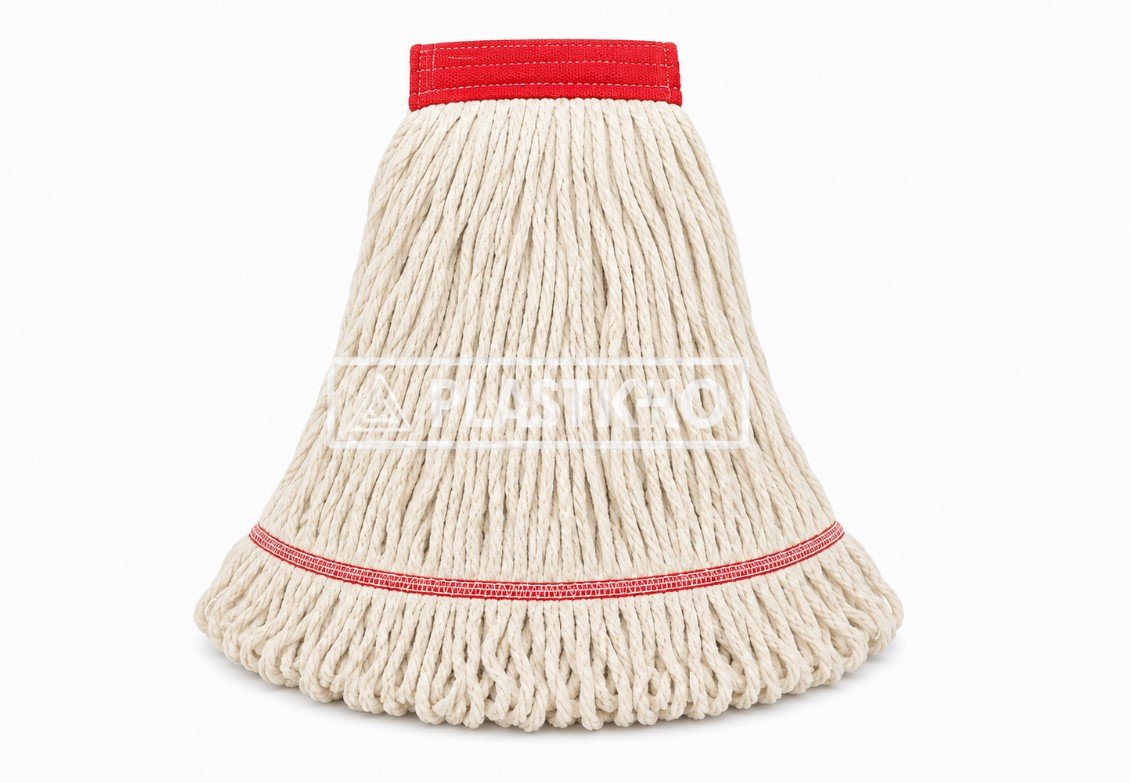
As floor area and cleaning intensity increase, purchasing teams often move toward a mop head with greater working capacity. A Wet Mop 500g can be a practical step up for medium-to-heavy commercial cleaning where the mop needs to remain productive across larger floor sections while still fitting a conventional mop-and-wringer workflow.
Hotels, malls, restaurants, factories, educational buildings, offices and professional cleaning companies can all have areas where a lighter mop works well and other areas where additional mop material is useful.
Plasticko currently sells the Wet Mop 500g as a dedicated product and positions this category for commercial environments such as hotels, hospitals, clinics, restaurants, offices, schools, factories, warehouses, malls and contract cleaning operations.
Why Businesses Move Toward a 500g Wet Mop
A cleaning route becomes more demanding when it combines larger floor areas, greater soil levels and repeated work throughout the day.
The 500g category provides buyers with another point on the weight ladder.
Instead of asking, “Is 500g the best mop?” ask:
Does a 500g mop fit the amount of floor our staff must clean within each shift?
That single question creates a better procurement decision.
Wet Mop 500g and Floor Coverage
Commercial cleaning productivity depends partly on how efficiently employees can complete each floor section.
More material in the mop head can influence the amount of cleaning solution the mop carries and the contact area created during each pass.
However, more retained liquid also increases working weight.
The ideal mop therefore balances:
- Floor coverage
- Water control
- Staff comfort
- Wringing frequency
- Soil load
- Cleaning speed
This balance is more meaningful than choosing solely according to GSM or grams.
Using a 500g Mop in Shopping Malls and Large Facilities
Shopping centres combine corridors, entrances, food-service areas, washrooms and service zones.
These areas can generate continuous foot traffic.
A 500g wet mop can be considered for planned floor-washing routes where teams need to cover broader areas than a small room but where powered floor machines are not practical for every section.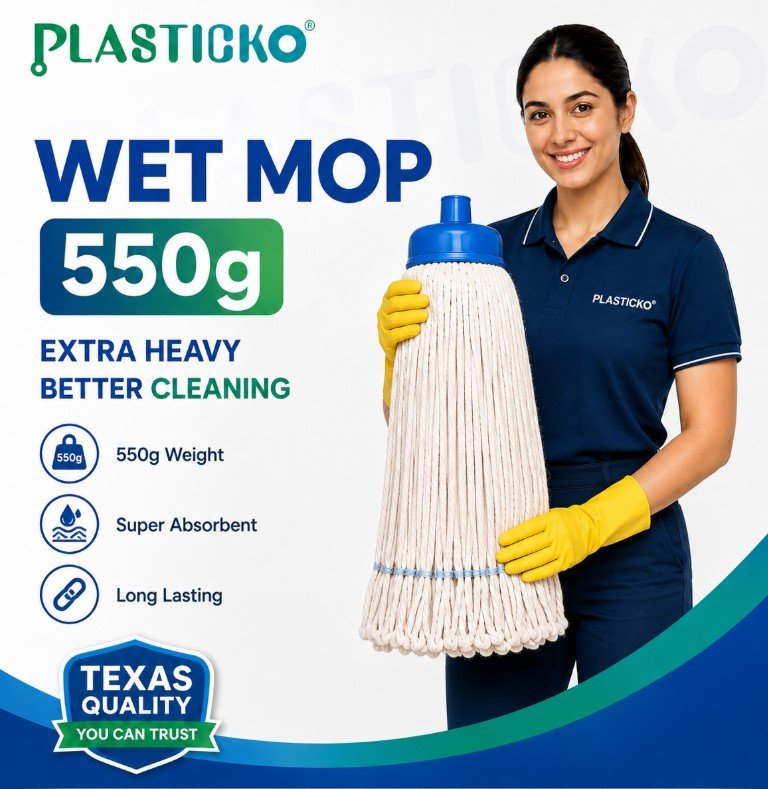
Entrance and High-Traffic Zones
Entrances may accumulate moisture, dust and footwear marks.
The cleaning program should include frequent inspections rather than waiting for a single end-of-day cleaning session.
Wet-floor signage is particularly important when cleaning takes place while customers or staff remain in the building.
Wet Mop 500g for Industrial and Factory Support Areas
Factories include production areas, storage rooms, changing areas, offices and corridors.
Not every surface should be cleaned in the same way.
A 500g mop can support suitable hard-floor maintenance in general industrial areas, but facilities should follow site-specific safety and contamination procedures.
Know When General Wet Mopping Is Not Enough
Oil, hazardous substances, chemical residues or specialist production contamination may require dedicated spill-response or industrial-cleaning procedures.
A commercial wet mop should never be presented as universal protective equipment.
Hospitality and Banquet Cleaning
Hotels and event venues often require fast floor recovery after functions.
Large banquet rooms can experience food debris, beverage spills and heavy foot traffic.
After loose debris is removed, a 500g mop may offer useful floor coverage for sections that require controlled washing.
The cleaning manager should coordinate the mop with an appropriately sized bucket and wringer so staff are not repeatedly walking long distances to rinse the head.
How 500g Changes the Mop-and-Bucket Workflow
A larger mop head can make bucket selection more important.
Small buckets may physically work but become inconvenient during long cleaning routes.
For medium-to-large operations, commercial trolley systems can support greater mobility.
Plasticko currently offers dual-compartment products such as its 50L Double Mop Bucket with Wringer and 60L Double Mop Bucket with Wringer.
Why Dual Compartments Can Be Useful
Where facility procedure calls for it, separate compartments allow cleaning teams to manage fresh solution and dirty rinse water within the same mobile system.
This does not automatically make every floor cleaner, but it can support more organized water management during long routes.
Wet Mop 500g vs 450g: Which Should a Buyer Select?
Both can be suitable for commercial cleaning.
The difference should be considered through workload.
| Factor | Wet Mop 450g | Wet Mop 500g |
|---|---|---|
| Main emphasis | Balanced frequent use | Higher-demand cleaning |
| Handling | Slightly lighter | Slightly heavier |
| Medium routes | Strong option | Strong option |
| Larger floor sections | Suitable | Often worth considering |
| Water load | Moderate | Potentially higher |
| Operator preference | Easier for some users | More substantial working feel |
The final choice also depends on yarn, mop construction and wringer system.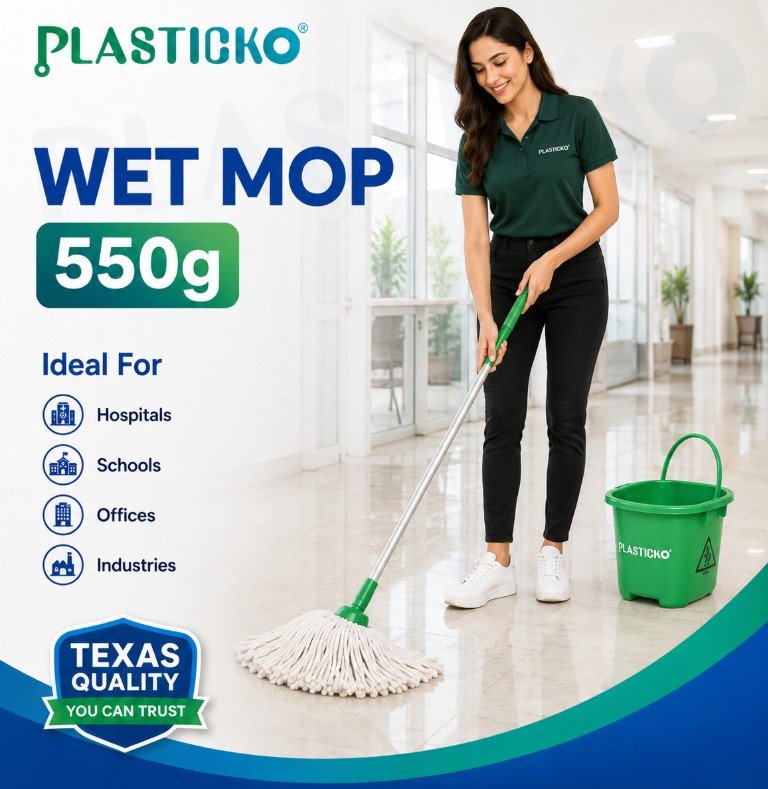
Compare 500g with 550g Before Standardizing
If your facility has particularly large or heavily used floors, compare the 500g mop with the next weight category before placing a large order.
A 550g option may provide additional working material but will also become heavier when saturated.
This is why representative site testing matters.
The best result is the specification that cleans the required floor area efficiently without making the employee’s workflow unnecessarily difficult.
Commercial Cleaning Labour and Mop Selection
Labor is often more expensive than the mop itself.
A low-cost cleaning tool that forces staff to make repeated passes or creates frequent compatibility problems can produce hidden costs.
Procurement teams should therefore evaluate:
Time per cleaning route
Number of rinse cycles
Ease of wringing
Replacement frequency
Number of passes required
Staff feedback
This turns mop purchasing into an operational decision rather than a simple consumables order.
Water and Chemical Control for 500g Mopping
A larger mop head can carry more working moisture depending on material.
That does not mean staff should automatically use more chemical.
Cleaning chemicals should be diluted and used according to manufacturer instructions and the facility’s approved process.
Excess chemical can leave residue, increase cost and potentially create additional rinsing requirements.
Train Staff to Wring Consistently
Two employees using the same 500g mop may leave very different amounts of moisture on the floor if their wringing technique is inconsistent.
A commercial press wringer can help standardize the process.
A Better Cleaning Sequence for Large Routes
For high-traffic floors:
Stage 1 — Remove Dry Soil
Use a suitable dry mop, dust mop, broom or vacuum depending on the floor and debris.
Stage 2 — Wet Clean
Apply the planned wet-mopping procedure using controlled solution.
Stage 3 — Inspect
Look for remaining marks, pooled water or areas requiring a second pass.
Stage 4 — Process Equipment
Rinse, clean, dry and store mop heads according to the material and workplace procedure.
Plasticko’s current wet-mop-versus-dry-mop guide similarly explains that the two methods can be used sequentially.
Replacement Planning for a 500g Mop Fleet
Large organizations should not wait until multiple mop heads fail simultaneously.
Maintain a replacement buffer.
For example, if twenty mops are required during peak operations, procurement can maintain additional units for laundering, drying, damage and emergency replacement.
The exact buffer depends on facility size and processing time.
B2B Inventory Control
Assign a basic stock code to each mop specification.
Record:
Product: Wet Mop 500g
Approved supplier: Plasticko or selected source
Compatible handle: Recorded model
Compatible wringer: Recorded model
Minimum stock level: Internal value
Reorder quantity: Internal value
Primary cleaning zones: Listed areas
This simple method reduces accidental ordering of incompatible replacements.
Wet Mop 500g Price Comparison in Pakistan
Plasticko’s current product page references a broad comparable-market range of approximately PKR 600–1,600 for the 500g class. A separate Plasticko commercial-mop market table lists approximately PKR 475–850 for a 500 GSM heavy wet-mop refill. These figures represent different market contexts, not a guaranteed Plasticko selling price, so buyers should confirm whether they are comparing the same material, refill-only product, holder, handle, packaging and order volume.
| Price Context | Indicative Range | Buyer Check |
|---|---|---|
| Heavy 500 GSM refill reference | PKR 475–850 | Refill-only specification |
| Broader 500g product class | PKR 600–1,600 | Material and seller basis |
| B2B carton purchase | Current quote | MOQ and unit count |
| Complete mop setup | Higher than refill | Handle/frame included? |
Commercial buyers should request a current quotation before budgeting.
Wholesale Purchasing Strategy
Ask suppliers to state:
- Exact mop weight
- Yarn/material description
- Attachment style
- Units per pack
- Units per carton
- MOQ
- Available colours
- Dispatch time
- Freight terms
- Delivery city
- Quote validity
This makes offers easier to compare.
Plasticko’s live product page specifically encourages B2B buyers to provide quantity, specification and delivery city when requesting a wholesale quotation.
Related Blog Articles
- Wet Mop vs Dry Mop for Professional Cleaning Teams
- How to Choose Wet Mop and Dry Mop for Commercial Floors
- Commercial Mop Maintenance and Refill Replacement Guide
- Mop GSM and Dry Mop Size Buying Guide Pakistan
The first two guides are live on Plasticko.
Related Products
- Wet Mop 450g
- Wet Mop 500g
- Wet Mop 550g
- Wet Mop Category
- Double Mop Bucket 50L with Wringer
- Double Mop Bucket 60L with Wringer
Final Recommendation for Commercial Buyers
A Wet Mop 500g should be considered by businesses that need more demanding wet-cleaning performance than lightweight maintenance work but still want the flexibility of a conventional manual mop system.
It can work particularly well for larger hotel sections, shopping centres, educational buildings, office facilities, restaurants, warehouses and cleaning contractors.
Do not approve a bulk order based on the weight number alone.
Test compatibility, check the yarn and fitting, evaluate staff comfort and compare cleaning time. Then build the product into a controlled replacement and reorder system.
That approach gives procurement teams a much better chance of reducing hidden cleaning costs.
FAQs About Wet Mop 500g
1. What type of cleaning is a 500g wet mop designed for?
It can suit medium-to-heavy routine commercial cleaning where facilities need a substantial mop head for wider or more demanding floor routes.
2. Is Wet Mop 500g suitable for malls?
It can be useful in appropriate mall areas such as corridors and service sections where manual wet mopping forms part of the cleaning plan.
3. Can factories use a 500g mop?
Yes for suitable general areas, but industrial contamination, oils or hazardous materials may require specialist procedures.
4. Is 500g too heavy for everyday use?
That depends on the employee, mop material, absorbed water and length of the cleaning route. Representative site testing is recommended.
5. What is the difference between 450g and 500g?
The 500g category contains more listed dry weight. In practical use this may influence water capacity and working feel, although construction also matters.
6. Should a 500g mop use a larger bucket?
For longer routes, a larger mobile bucket can improve workflow. Physical compatibility and the facility’s cleaning procedure should determine the final choice.
7. How can businesses control replacement costs?
Track active mop stock, remove damaged heads promptly and maintain a planned reorder level rather than purchasing only after shortages occur.
8. Can Wet Mop 500g be ordered wholesale?
Yes. Plasticko currently supports quotation requests for bulk commercial requirements.
9. What affects Wet Mop 500g pricing?
Material, construction, pack size, handle inclusion, order quantity, freight, tax, city and market availability can all influence the delivered cost.
10. What should I compare before choosing 500g or 550g?
Compare floor area, staff workload, saturated working weight, coverage, wringer compatibility and sample performance under normal conditions.