
Professional floor cleaning requires more than choosing a single mop for every task. Hotels, hospitals, restaurants, offices, schools, factories, cleaning contractors and facility management companies often need different mop types for washing floors, collecting dry dust, maintaining large open areas and organizing color-coded cleaning systems.
Plasticko offers a broad range of commercial mops in Pakistan, including wet mops in different weights, dry mops in multiple widths, replacement refills, acrylic dust mops and color-coded cotton mops. This variety allows procurement teams to select cleaning equipment according to floor area, cleaning frequency, staff requirements and operational environment.
For wholesalers, janitorial suppliers and institutional purchasing departments, understanding the differences between these products can also make bulk purchasing and replacement planning more efficient.
Wet Mops for Routine and Heavy-Duty Floor Washing
A wet mop is one of the most widely used tools for commercial hard-floor cleaning. It is designed for washing floors with water or suitable cleaning solutions and can be used in hospitality facilities, healthcare environments, restaurants, educational institutions, offices and industrial premises.
Plasticko’s commercial Wet Mop range includes several weight options, from Wet Mop 350g and Wet Mop 400g through heavier models designed for more demanding cleaning routines.
Wet Mop 350g and Wet Mop 400g
The Wet Mop 350g and Wet Mop 400g provide lighter options within the commercial range. These sizes can be considered where maneuverability and frequent routine cleaning are important.
Lighter mop heads may be easier for cleaning staff to handle during repeated floor-care rounds, particularly in smaller spaces or areas containing furniture and equipment.
The ideal weight should always be selected according to actual floor conditions, cleaning frequency and the system used by the facility.
Wet Mop 450g, 500g and 550g
For businesses requiring a balance between mop-head capacity and handling, Plasticko provides Wet Mop 450g, Wet Mop 500g and Wet Mop 550g.
These options give procurement managers flexibility when standardizing cleaning tools across multiple departments or locations. A hotel, for example, may require different mop weights for guest corridors, back-of-house areas and washrooms.
Cleaning contractors can also maintain multiple weights to match different client sites without relying on a one-size-fits-all approach.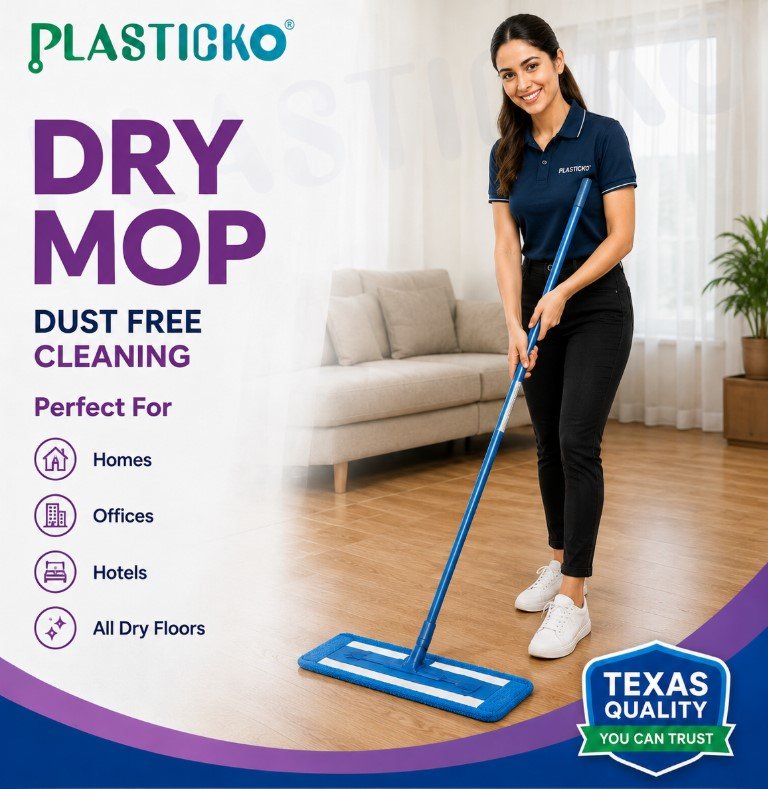
Wet Mop 600g and Wet Mop 650g
Larger floor areas and heavier commercial cleaning requirements may justify a heavier mop head. Plasticko lists a verified Wet Mop 600g range along with the Wet Mop 650g.
The 650g option is positioned for heavier-duty commercial floor cleaning. However, procurement teams should consider more than weight alone. Staff comfort, wringing equipment, floor dimensions, drying arrangements and frequency of use should all influence the final choice.
Dry Mops for Dust and Loose Debris Control
Where wet cleaning removes attached soil and spills, a dry mop is useful for collecting loose dust, lint, hair and surface debris. Dry mopping can form the first stage of a commercial floor-cleaning routine before wet mopping begins.
It is particularly useful in hotels, hospitals, offices, schools, warehouses, factories and other facilities with extensive hard flooring.
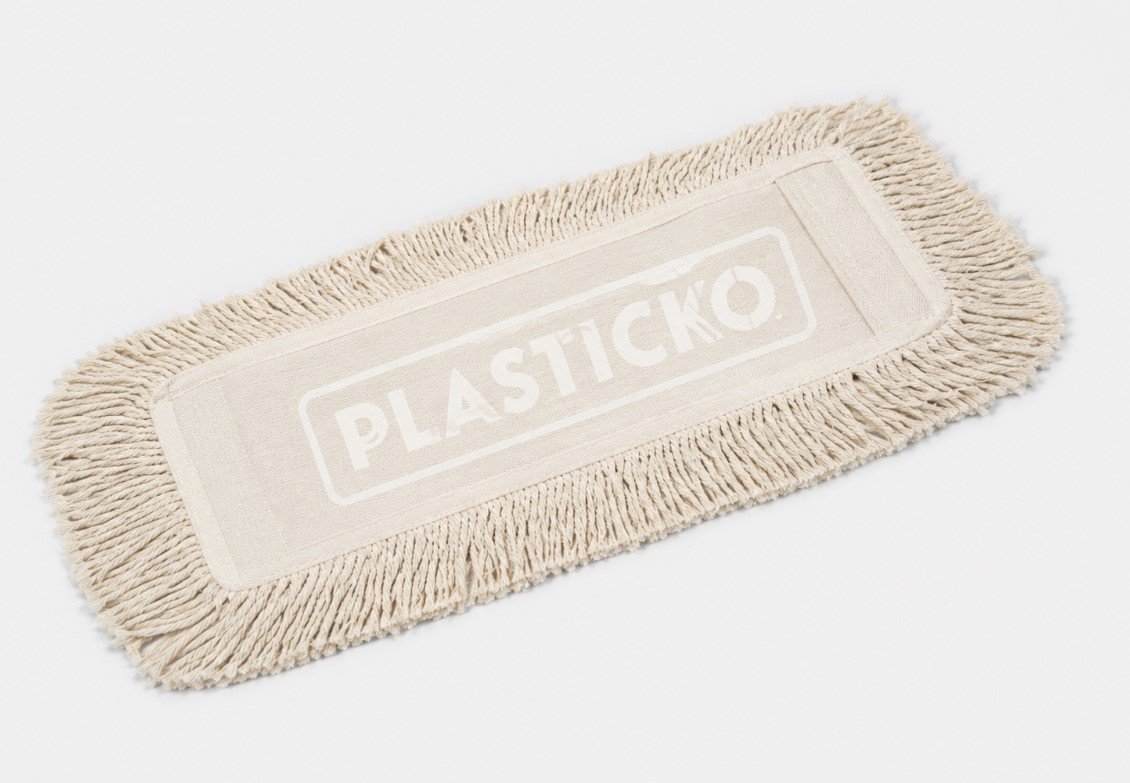
Businesses that already use compatible equipment can source a Dry Mop Refill instead of replacing the entire cleaning system whenever a mop head reaches the end of its practical service life.
Dry Mop Cotton and Dry Mop Acrylic Blue
Material selection can be another consideration when building a commercial cleaning program. The Dry Mop Cotton provides a cotton-based option, while Dry Mop Acrylic Blue provides an acrylic alternative.
The suitable material depends on the organization’s existing cleaning procedures, floor environment, maintenance routine and replacement strategy.
For procurement teams, standardizing the material used across departments can help simplify repeat orders and inventory management.
Choosing the Right Dry Mop Width
Dry mop width can significantly affect cleaning efficiency. Smaller mops are generally easier to maneuver around obstacles, while larger widths allow cleaning staff to cover broad open floors more efficiently.
Plasticko’s commercial range includes several width options.
The Dry Mop 24 Inch can suit offices, smaller commercial spaces and areas where maneuverability is important.
The Dry Mop 36 Inch provides additional floor coverage and can be useful in hotels, institutions and commercial corridors.
For larger spaces, buyers can consider the Dry Mop 40 Inch or Dry Mop 46 Inch.
The wide-format Dry Mop 60 Inch is particularly relevant to large open industrial areas, warehouses, factories and facilities where broad floor coverage is a priority.
Rather than simply selecting the largest size available, buyers should consider aisle width, furniture, machinery, storage racks and other physical obstacles.
Dust Mop Refills for Commercial Floor Maintenance
A dust mop refill allows businesses to maintain their existing mop systems without repeatedly replacing compatible handles and frames. This can simplify inventory management for organizations operating multiple cleaning teams.
Plasticko’s Acrylic Dust Mop range provides options suitable for commercial dust-control programs.
Dust mops are especially practical for routine maintenance of smooth hard floors where loose particles accumulate throughout the working day. Regular dry dust removal can also support the subsequent wet-cleaning process by reducing the amount of loose debris on the surface.
Color-Coded Acrylic Dust Mops
Plasticko offers several color options within its acrylic dust mop family, including Blue Dust Mop, Red Dust Mop, Green Dust Mop, Yellow Dust Mop and White Dust Mop.
Color differentiation can help commercial facilities organize cleaning equipment according to their own internal procedures. For example, a company may assign different colors to separate zones, departments or cleaning tasks.
Each organization should establish its own color-coding rules based on its operational and hygiene requirements rather than assuming a universal color standard.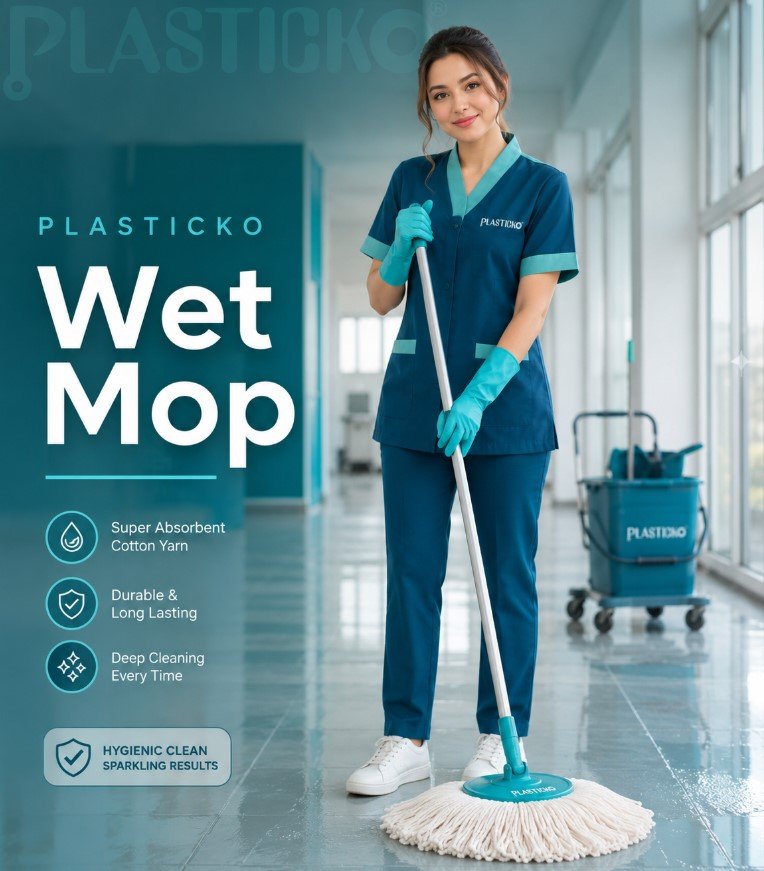
Cotton Mops for Professional Cleaning Operations
Cotton mops remain an important part of many commercial and institutional cleaning programs. They are used by hotels, restaurants, hospitals, janitorial teams and other organizations requiring replaceable floor-cleaning equipment for recurring use.
A key advantage for B2B procurement is the availability of multiple color options. Plasticko’s cotton mop range includes White Cotton Mop, Red Cotton Mop, Yellow Cotton Mop, Blue Cotton Mop and Green Cotton Mop.
Color-coded cotton mops can help supervisors distinguish equipment assigned to specific work areas. This is particularly useful for facilities managing several cleaning teams or zones.
For bulk purchasers, color availability can also simplify warehouse organization and distribution to individual departments.
How to Select Commercial Mops for Your Facility
Commercial mop procurement should begin with the floor area and cleaning task rather than price alone.
For routine washing, determine which wet mop weight provides suitable handling and floor coverage. A business may choose lighter 350g or 400g options for frequent work while using 600g or 650g mops for heavier cleaning requirements.
For dry floor maintenance, select a width based on the usable floor space. A 24-inch mop can be practical in constrained environments, whereas 40, 46 or 60-inch dry mops can make more sense across larger unobstructed areas.
Procurement teams should also consider replacement frequency. Maintaining suitable dry mop refills and dust mop refills helps avoid unnecessary downtime when used heads require cleaning or replacement.
Finally, consider whether color-coded equipment would improve internal housekeeping procedures.
B2B Mop Purchasing and Inventory Planning
Hotels, hospitals, factories, offices and cleaning contractors often consume janitorial products continuously. Buying without an inventory plan can result in some mop types being overstocked while essential refills become unavailable.
Procurement teams should document which mop type, size, material and color is used in each department. Minimum refill quantities can then be established according to usage rates.
Wholesalers and janitorial suppliers may benefit from maintaining a structured assortment covering wet mop weights, dry mop widths, acrylic dust mop colors and cotton mop colors. This allows them to respond more effectively to different institutional requirements.
Businesses requiring product availability or bulk purchasing information can contact Plasticko for B2B enquiries rather than relying on unverified market pricing.
Maintaining Commercial Mops Properly
Correct maintenance is essential for reusable cleaning equipment. Used wet and cotton mop heads should be cleaned according to the facility’s established procedure and dried thoroughly before storage.
Dry and dust mop heads should be cleared of accumulated debris and inspected regularly. Handles, frames and connection points should also be checked for wear.
Facilities can improve stock control by separating clean equipment, used equipment and items awaiting replacement. A simple rotation system helps ensure cleaning staff have usable mop heads available at the beginning of each shift.
Build a Complete Commercial Floor-Cleaning System
No single mop is ideal for every commercial floor-care task. Wet mops support washing, dry mops help collect loose debris, dust mop refills support ongoing dry maintenance, and cotton mops provide additional options for organized commercial cleaning programs.
The choice between 350g, 450g, 500g or 650g wet mops—or between 24-inch and 60-inch dry mops—should depend on the actual operating environment.
By selecting suitable sizes, materials, colors and replacement stock, hotels, hospitals, offices, schools, factories, cleaning contractors and facility management teams can build a more organized procurement system.
Plasticko’s range enables B2B buyers to source multiple commercial mop categories from a single supplier while selecting products according to specific floor-care requirements.