A hotel may use a wet mop for washrooms, a wide dry mop for corridors, color-coded dust mops for controlled cleaning zones, and cotton mop heads for routine floor care.
For procurement teams in Pakistan, the most effective approach is to treat mops as a cleaning system rather than a single item. This guide explains where Kentucky mops, wet mops, dry mops, dust mop refills, acrylic dust mops, and cotton mops fit in a commercial cleaning program. It also highlights practical factors to consider when sourcing for repeat use, bulk requirements, and multi-site operations.
Kentucky Mop vs Wet Mop: Understanding the Heavy-Duty Cleaning Role
A Kentucky mop is generally associated with traditional heavy-duty floor mopping, especially where a substantial mop head is useful for washing larger hard-floor areas. For B2B buyers, the important issue is not the name alone but whether the mop head, handle compatibility, absorbency, laundering routine, and replacement availability match the cleaning workload.
A standard wet mop serves a similar core purpose: applying cleaning solution, loosening soil, collecting liquid, and supporting routine floor washing. In commercial premises, wet mops are commonly used in washrooms, kitchens, service areas, clinics, institutional buildings, restaurants, and general housekeeping operations.
Plasticko’s commercial wet mop range includes multiple weight options, allowing procurement teams to select a format that suits lighter routine cleaning or more demanding floor-care tasks.
Choosing Wet Mop Weight for Different Facilities
Wet mop weight affects handling, liquid capacity, and the amount of floor area a cleaner can cover comfortably. A lighter mop may be easier to control during frequent cleaning rounds, while a heavier option can be appropriate where teams want more material in contact with the floor.
The range includes Wet Mop 350g, Wet Mop 400g, Wet Mop 450g, Wet Mop 500g, Wet Mop 550g, Wet Mop 600g, and Wet Mop 650g. The 650g option is positioned for heavier-duty commercial floor cleaning, while the broader range gives buyers flexibility for different teams and cleaning frequencies.
Rather than assuming the heaviest mop is automatically best, procurement managers should consider floor size, staff preferences, cleaning frequency, wringer compatibility, drying time, and the physical effort required during long shifts.
Dry Mops for Routine Dust and Debris Control
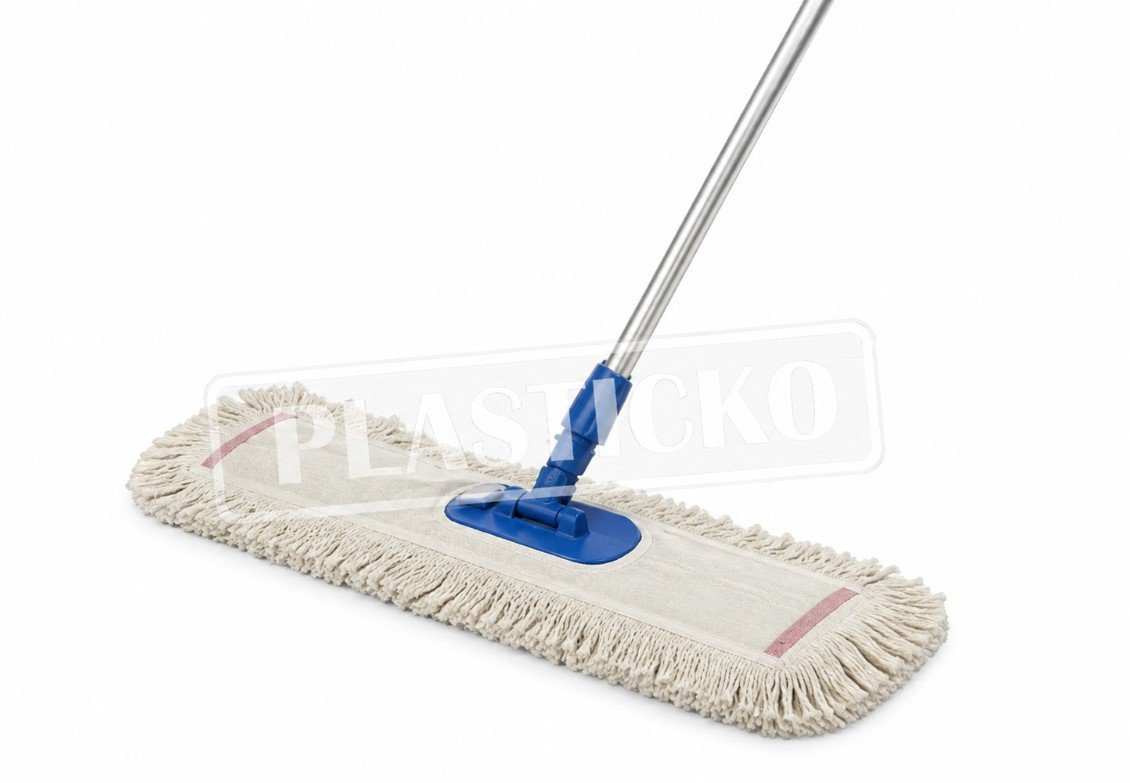
A dry mop is designed for dry floor maintenance rather than liquid cleaning. It helps collect dust, hair, lint, and loose debris from hard surfaces before wet cleaning or as part of regular daytime housekeeping. This makes dry mops valuable in hotels, hospitals, offices, schools, warehouses, factories, corridors, halls, and other commercial interiors.
For facilities with large open floors, dry mopping can help reduce the amount of loose soil that later enters the wet-cleaning stage.
Plasticko offers dry mop refill options for replacement planning, together with material and width choices for different commercial environments.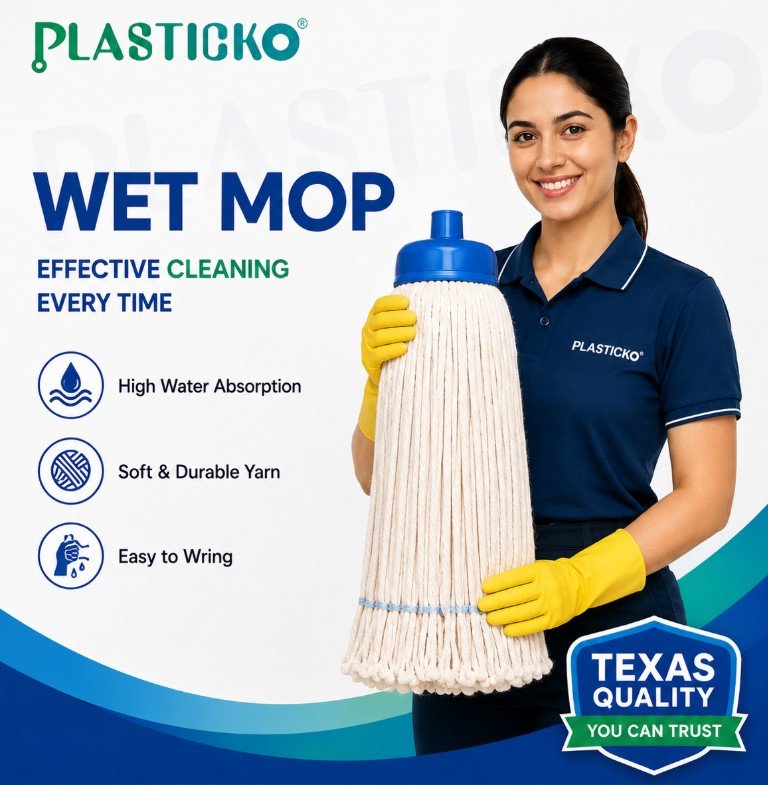
Cotton, Acrylic and Size-Based Dry Mop Options
Material choice should reflect the cleaning routine and the type of debris being collected. A Dry Mop Cotton can suit buyers who prefer a cotton-based floor-care option, while the Dry Mop Acrylic Blue provides an acrylic alternative within the range.
Width is another important procurement decision. Plasticko lists Dry Mop 24 Inch, Dry Mop 36 Inch, Dry Mop 40 Inch, Dry Mop 46 Inch, and Dry Mop 60 Inch.
Smaller widths can be easier to maneuver around furniture and tighter commercial spaces, while wider dry mops are better suited to open halls, warehouses, factories, and broad circulation areas. Buyers should match the width to actual floor layout instead of selecting only by headline size.
Dust Mop Refills and Color-Coded Acrylic Dust Mops
Dust mop refills are especially important in B2B purchasing because the replacement head is the part that sees repeated contact with the floor. A well-planned refill inventory helps housekeeping teams replace worn or soiled heads without taking a complete mop system out of service.
Semrush data in the supplied screenshots shows direct search interest around dust mop, dust mop refill, dust mop handle, dust mop frame, cotton dust mop, and how to use a dust mop. For Plasticko, the commercially useful opportunity is to focus on the actual dust-mopping system and replacement requirements rather than unrelated branded searches.
The Acrylic Dust Mop range is particularly useful for facilities that want clearly differentiated cleaning tools. Available color families include Blue Dust Mop, Red Dust Mop, Green Dust Mop, Yellow Dust Mop, and White Dust Mop.
Color-coded equipment can support internal cleaning procedures by making it easier for staff to identify which tools belong to designated areas. The exact color policy should be defined by each facility’s own housekeeping or hygiene protocol.
Cotton Mops for Commercial Cleaning Programs
Cotton mop products remain relevant for hotels, hospitals, restaurants, institutions, janitorial teams, and cleaning contractors that need dependable mop heads for recurring floor-care work. Cotton-based options can be incorporated into routine cleaning programs where teams value familiar handling and straightforward replacement planning.
Plasticko’s cotton mop family includes White Cotton Mop, Red Cotton Mop, Yellow Cotton Mop, Blue Cotton Mop, and Green Cotton Mop. As with dust mops, different colors can help organizations structure their own area-based cleaning routines.
When buying cotton mops in bulk, buyers should assess how often heads will be used, washed, dried, rotated, and replaced.
How B2B Buyers Should Select Commercial Mops
The best commercial mop for a facility depends on workflow, not just product terminology. Procurement teams should begin by mapping floor areas and cleaning tasks. Wet-cleaning zones, dry-maintenance areas, food-service sections, washrooms, public corridors, warehouses, and controlled environments may each need a different tool.
Next, consider cleaning frequency. A site cleaned several times a day may require more refill stock and faster rotation than a low-traffic area. Multi-shift operations should also account for drying and laundering time so fresh mop heads are available when the next team starts.
Compatibility matters as well. Before placing a bulk order, confirm that mop heads, frames, handles, and wringer systems work together. This is particularly important when replacing only one component of an existing cleaning setup.
Finally, standardize where practical. Using a defined set of mop types and widths across multiple locations can simplify staff training, replacement purchasing, and stock control.
Maintenance and Storage for Longer Service Life
Commercial mops perform best when cleaning teams follow consistent maintenance procedures. After use, wet mop heads should be cleaned according to the facility’s process and allowed to dry properly before storage. Storing damp heads in closed or poorly ventilated spaces can create hygiene and odor problems.
Dry and dust mop heads should be cleared of collected debris and maintained according to their material type. Frames and handles should also be inspected for damage, loose connections, or wear that could affect safe and efficient use.
Facilities should keep clean and used mop heads separated. A simple rotation system can help supervisors track what is ready for use, what requires washing, and what should be replaced.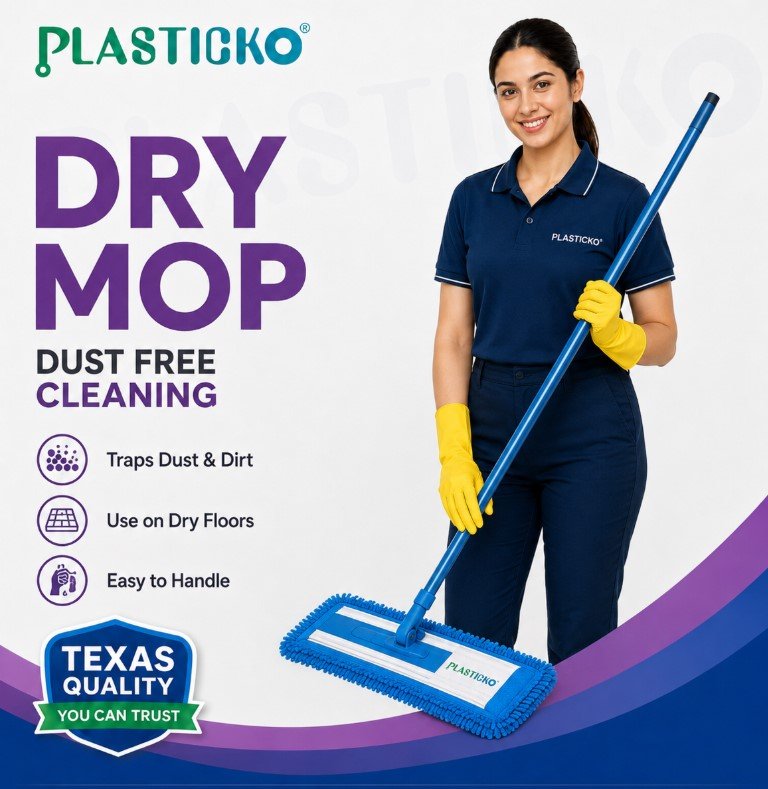
Building a Practical Mop Procurement Plan
For a small office, a compact dry mop plus a suitable wet mop may cover most routine requirements. A hotel or hospital may need multiple wet mop weights, color-coded dust or cotton mops, and a standing stock of refills. Warehouses and factories may benefit from wider dry mops such as 40, 46, or 60 inch models for large open floors.
Cleaning contractors and janitorial distributors have an additional consideration: consistency across customer sites. Carrying a structured range of wet mop weights, dry mop widths, dust mop refills, and cotton color options can make repeat ordering more efficient.
Plasticko supports B2B and wholesale buyers across Pakistan with commercial cleaning and janitorial products. For current availability and bulk requirements, procurement teams can use the Plasticko contact page to request a quotation rather than relying on an unverified fixed price.
Frequently Asked Questions:
Q1. What is a Kentucky mop used for?
A Kentucky mop is used for wet floor cleaning, particularly where a larger traditional mop head is preferred for commercial or institutional floor-care work. Buyers should confirm the mop head format, handle compatibility, and cleaning routine before standardizing it across a facility.
Q2. What is the difference between a dry mop and a wet mop?
A dry mop collects loose dust, lint, hair, and debris without water, while a wet mop is used with water or cleaning solution for washing hard floors. Many commercial cleaning programs use dry mopping first and wet mopping afterward.
Q3. Which dry mop size is best for commercial floors?
The best width depends on the floor layout. A 24-inch dry mop is easier to control in tighter areas, while 36, 40, 46, and 60-inch options can improve coverage in larger corridors, halls, warehouses, and factories.
Q4. Why should facilities keep dust mop refills in stock?
Refills allow teams to replace soiled or worn mop heads while continuing to use compatible handles and frames. Keeping replacement stock helps reduce downtime and supports consistent cleaning schedules.
Q5. Can color-coded mops support commercial cleaning procedures?
Yes. Different mop colors can help staff distinguish tools assigned to different areas or tasks. Each business should define its own color-coding policy based on its hygiene and operational requirements.